All posts tagged Bedroom furniture

2 Posts
La Star Dama Bianca Ivory Lacquer Living Room Wall Unit Sideboard Mirror Room View

How to Use Mirrors to Bring Light and Structure to an Italian Interior

A mirror can do more than brighten a dark corner. In a considered Italian interior, it can extend an architectural line, soften the visual weight of a substantial sideboard, or give a dining room a clearer focal point after daylight has gone. The most successful examples feel integral to the room rather than added as an afterthought.

That depends on proportion, position and finish. A mirror that is too small can disappear above a broad piece of furniture; one that is too ornate or too reflective can make a carefully composed room feel restless. The aim is not simply to create more light, but to decide what the room should reflect and why.

For customers furnishing a London home, mirrors can be especially useful where natural light is limited, ceilings vary in height, or a room needs a stronger sense of depth without more furniture. They work best when their frame, scale and placement respond to the furniture already in the room.

This guide explains how to choose the scale, finish and position of a mirror so it adds light, depth and composure to an Italian interior. Explore Mondital’s Italian furniture collections online, or visit the London showroom to compare finishes and room proportions in person.

Browse Living Room Furniture Visit the Showroom

La Star Dama Bianca ivory lacquer living room — a large mirror above the sideboard reflecting daylight from the window
La Star Dama Bianca — A wide mirror above a low storage piece can extend the room horizontally while keeping the furniture as the visual anchor.

Begin With What the Mirror Will Reflect

Before choosing a frame, stand where the mirror is likely to hang and look at its return view. A window, a garden, a chandelier or a well-composed seating area can make the room feel more open. A television, an unconsidered doorway or a crowded run of shelving may create more visual noise than benefit.

This is why a mirror is best treated as part of the room plan. In a living room, it may reflect the depth of a sofa arrangement or draw daylight towards the centre of the space. In a dining room, it can reinforce the table as the social focus. In a bedroom, it may create balance above a dressing table or between two bedside zones without competing with the bed.

  • Choose the wall after considering both the mirror and its reflected view.
  • Keep the lower edge at a height that relates to the furniture beneath it, rather than hanging it to an arbitrary room measurement.
  • Allow breathing space around an ornate frame so its detailing can be read clearly.
  • Use a mirror to support an existing focal point, not to introduce a second competing one.

The La Star Dama Bianca living room by Status Italia shows this well: its broad mirror sits above a low ivory-lacquer storage unit, extending the room along a single horizontal line while the furniture stays the anchor. The same principle underpins a composed living room: the sofa, occasional seating and lighting should have a clear relationship rather than each asking for attention. For a wider look at that foundation, see how a contemporary Italian sofa can shape a living room.

Match the Mirror’s Proportion to the Furniture Below

Above a sideboard, console or fireplace, a mirror should usually read as a deliberate companion to the element beneath it. It need not match its width exactly. A slightly narrower mirror can give a substantial sideboard room to breathe; a wider horizontal mirror can make a compact wall feel calmer and more expansive. The relationship matters more than a fixed formula.

Vertical mirrors are useful where ceiling height needs emphasis, particularly in entrance halls, bedrooms and narrower living spaces. Horizontal forms often suit dining rooms or long walls, where they can echo the line of a table or sideboard. A round or softly arched mirror can interrupt a room made up largely of rectilinear furniture, but it should still feel proportionate to the wall and the piece it accompanies.

Mirror format Often suits Effect in the room
Tall vertical mirror Narrow walls, bedrooms and halls Draws the eye upward and can give a lower-ceilinged room more lift
Wide rectangular mirror Dining-room sideboards and broad living-room walls Extends the horizontal line and reflects a larger field of light
Round or arched mirror Rooms with stronger linear furniture Introduces a softer silhouette without adding another large furniture piece

In the Aurora II dining room, a framed mirror above the vitrine sideboard echoes the width of the storage beneath it, connecting the mirror to the dining furniture through a shared frame finish rather than an exact match. A mirror above a dining-room sideboard should also leave space for the sideboard to remain useful. Lamps, serving pieces or a restrained arrangement of objects can sit below it; the mirror should lift the composition rather than make the surface feel crowded. For advice on the wider room, explore Mondital’s guide to designing an Italian dining room.
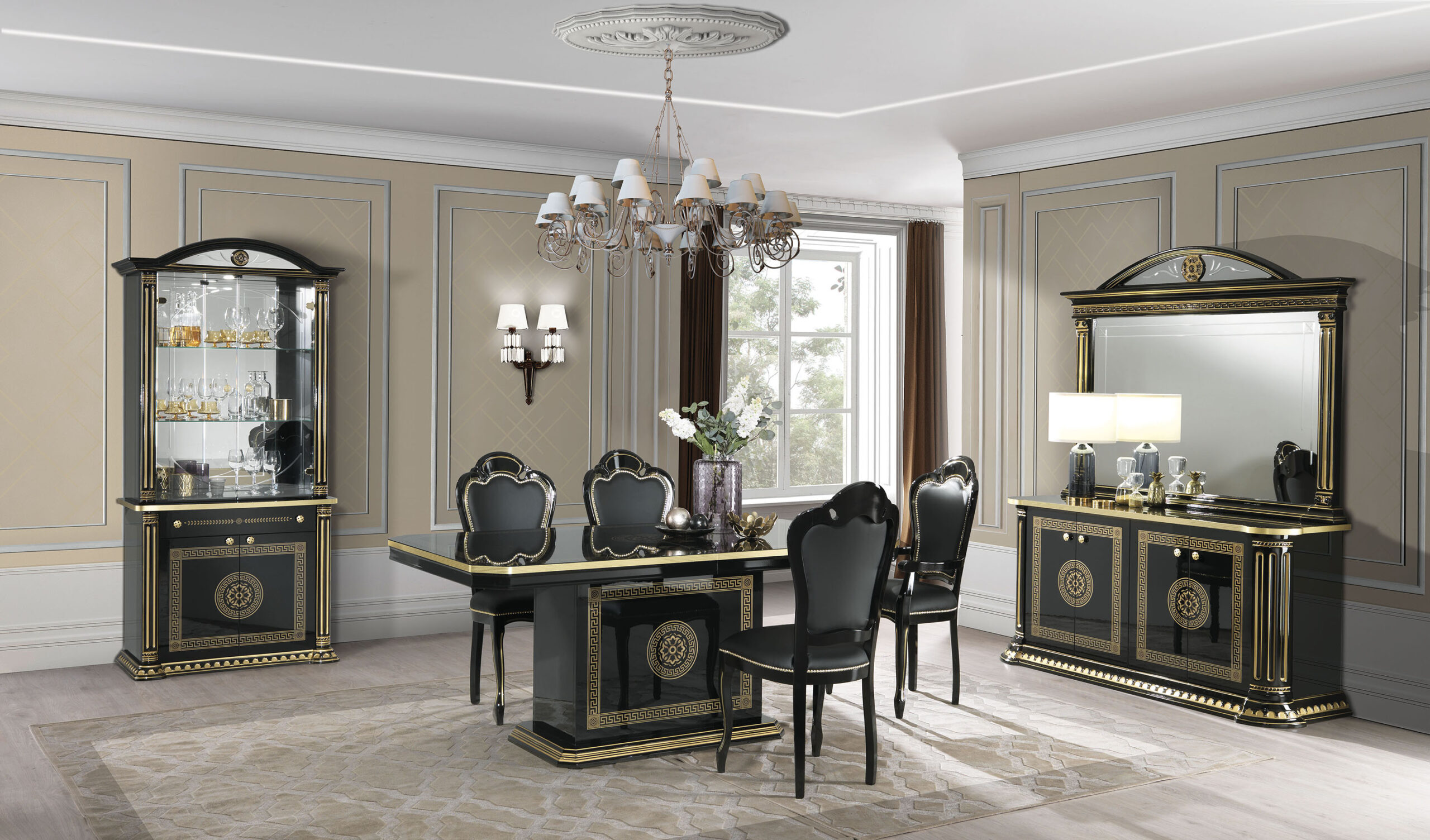
Aurora II dining room — framed mirror above a coordinated dining sideboard
Aurora II — In a dining room, the frame finish can connect a mirror to the table and storage without requiring every element to match.

Choose a Frame That Belongs to the Room

Frames are not merely decoration. Their material, tone and degree of detail determine whether a mirror settles naturally into a scheme. A warm timber or walnut-toned frame can relate to veneer, flooring or a dining table. A pale lacquered or streamlined metal edge may suit a contemporary room where the furniture already has a clean, architectural profile. A gilded frame can add light and definition to a classic setting when used with restraint.

Rather than trying to match every finish precisely, look for a shared note: a warm metallic tone, a similar timber depth, or a repeated curve. This keeps the interior coherent while allowing furniture to retain its own character. In a classic setting, a decorative frame often works best when the walls and nearby textiles are quieter. In a contemporary scheme, the mirror can be the softer, more expressive element against simpler forms.

For context on introducing more decorative pieces without making a room feel overworked, read how to create classic Italian style in your home. The same balance applies to a mirror: detail has more impact when the rest of the composition has room to breathe.

Explore Italian Furniture Collections

Use Reflection to Improve Light, Not Multiply Clutter

Mirrors are often recommended for darker rooms, but their effect depends entirely on what they face. Positioning one opposite or adjacent to a window can distribute daylight further into the room. At night, it can multiply the warmth of a lamp or pendant. It cannot, however, correct an overcrowded layout. When a mirror reflects too many small objects, cables or busy shelves, it makes the room feel more fragmented.

Start by simplifying the reflected field. A clear passage, an edited mantel or a single well-placed lamp will create a calmer result. This is particularly useful in compact London rooms, where a mirror should expand the sense of space rather than duplicate every object in it.

A note from our showroom team: mirrors are easier to judge beside furniture than in isolation. Bring room photographs and dimensions when you visit so scale, frame tone and the likely reflected view can be considered together.
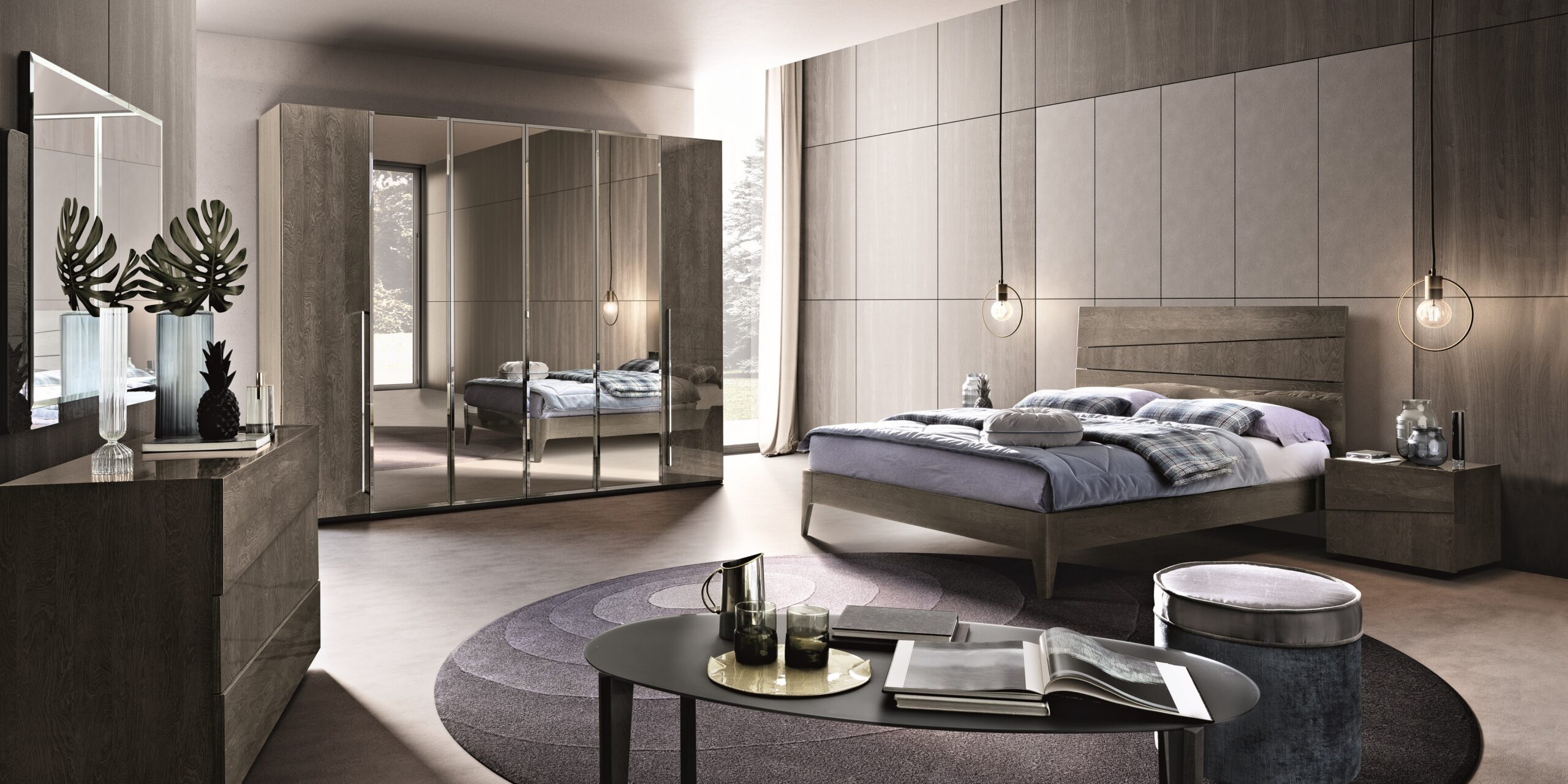
Tekno Italian bedroom — mirrored wardrobe and dressing area balanced with the bed
Tekno — A mirror in a bedroom is most effective when it supports the bed and storage arrangement rather than competing with the headboard.

Place Mirrors Differently in Living, Dining and Bedroom Spaces
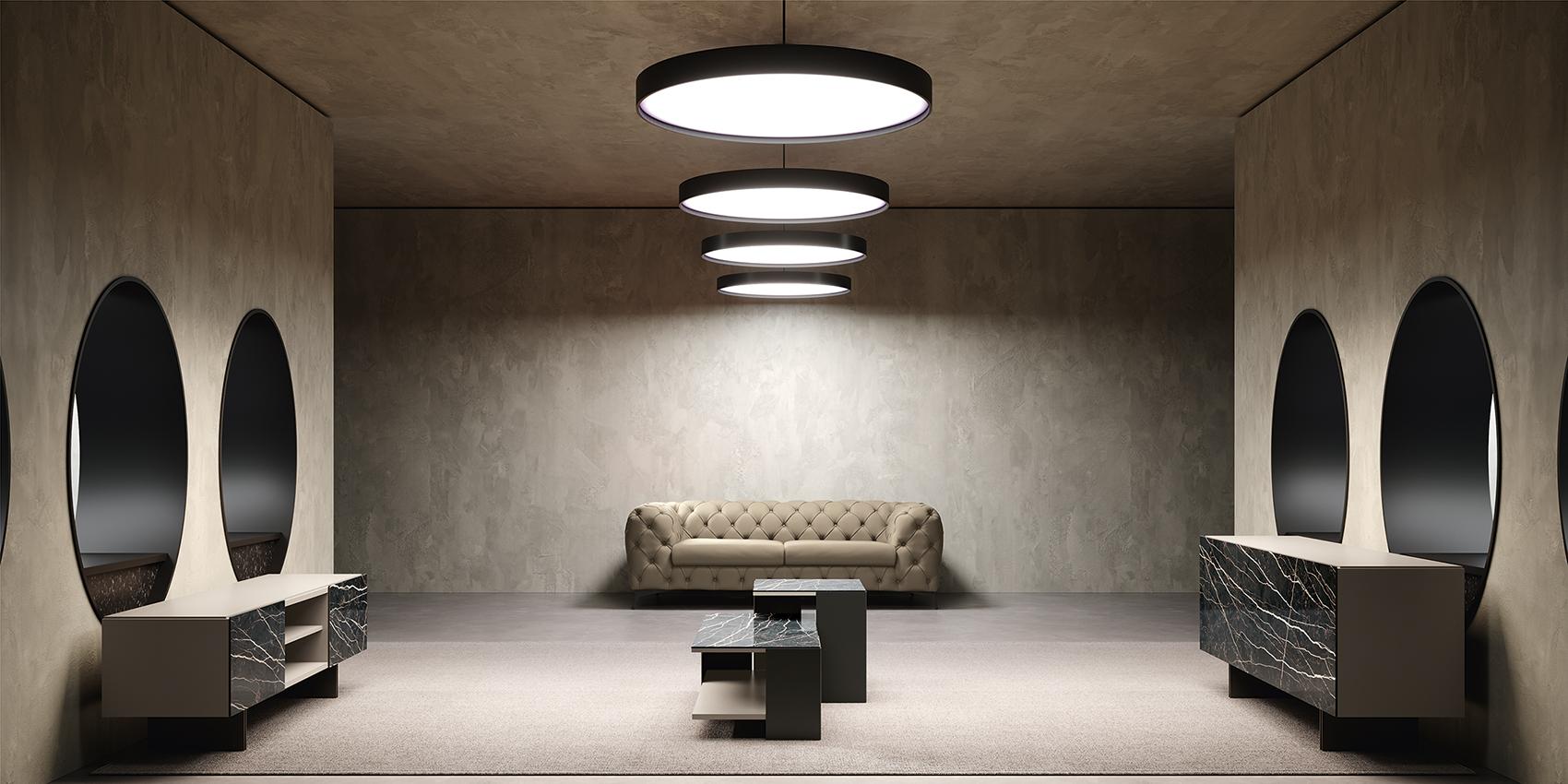
Zenith Day sofa with oval mirrors in a living room using reflected light to add depth
A living room where oval mirrors either side of the seating return daylight and extend the space visually.

The Zenith Day sofa by Status Italia, flanked by oval mirrors, shows how reflected daylight can extend a living room along its longest wall.

In a living room, a mirror commonly works above a fireplace or behind a sofa arrangement, where it can reinforce the room’s centre. Avoid placing it so low that seated guests see only fragments of themselves; the view should feel relaxed and architectural. If the room is anchored by a substantial sofa, let the mirror respond to its scale rather than trying to outsize it.

In a dining room, the most useful position is often above a sideboard or along a wall that receives daylight. It can add atmosphere in the evening by reflecting the dining table and lighting, but should not create uncomfortable glare for people seated at the table.

The Tekno bedroom illustrates the restrained approach: its mirrored wardrobe doors return light across the bed wall and support the storage arrangement without competing with the headboard. In a bedroom, consider whether a full-length mirror is needed for dressing, or whether a smaller mirror should provide balance above a dressing table. A large mirror directly opposite the bed can be visually active in a room intended for rest. For a more complete bedroom approach, see The Art of the Italian Bedroom and browse Italian bedroom furniture.

Experience Proportion and Finish in Person

A photograph can suggest a mirror’s style, but it cannot show how the frame catches light, how its scale relates to a sideboard, or whether the reflective surface changes the room in the way you expect. Those decisions become clearer when finishes, furniture proportions and room photographs can be considered together.

At Mondital, customers can explore coordinated Italian living, dining and bedroom furniture and discuss how a mirror might work within a wider scheme. Visit the London showroom, browse Italian dining-room furniture, or begin with the collections that best suit the room you are planning.

Plan a Showroom Visit Browse All Collections

Frequently Asked Questions

How large should a mirror be above a sideboard?

A mirror should relate clearly to the width and visual weight of the sideboard, without necessarily matching it exactly. A slightly narrower mirror often feels composed above a broad piece, while a wide horizontal form can suit a longer wall. Check the overall composition at standing distance before fixing the position.

Which mirror finish works best with Italian furniture?

The best finish is one that shares a material or tonal connection with the room. Walnut or timber tones can relate to veneer and flooring, a restrained metal edge can suit contemporary lacquered furniture, and a decorative gilded frame can work in a classic scheme. Avoid exact matching for its own sake; a coherent relationship is more convincing than a forced set.

Is it worth visiting the showroom before ordering?

Yes, particularly where a mirror will sit above a substantial piece of furniture or form part of a wider room scheme. Seeing furniture finishes and proportions in person makes it easier to judge frame tone, scale and how much visual weight the mirror should carry. Bring room measurements and photographs to make the conversation more specific.

Can Mondital help me plan a room around existing architecture and furniture?

Mondital can help customers consider how Italian furniture, finishes and proportions may work with an existing room. Bring photographs, dimensions and details such as fireplaces, windows or alcoves to the showroom. The team can help you compare pieces and develop a more coherent starting point for the scheme.


Discover Italian Furniture by Room

Living | Dining | Bedroom | Sofas | View All


Mondital – Authorised Retailer of Over 20 Italian & Global Brands

Mondital is an authorised retailer of over 20 Italian and global furniture brands, each selected for their exceptional quality and outstanding value. Our team is here to help you choose the right pieces, whether you are gathering inspiration or ready to furnish your home.

Call Us: 020 8556 1221 | WhatsApp: Chat with us | Get in Touch | Get Directions

Share

The Art of the Italian Bedroom

Written by the Mondital editorial team, with insight from our London showroom specialists in Italian furniture, upholstery, and bespoke interior planning.

There is something unmistakably elevated about an Italian bedroom. Whether it is the hand-finished lacquer of a statement headboard, the cool depth of marble-effect surfaces, or the deep grain of solid walnut — the level of artistry that defines well-made Italian bedroom furniture. At Mondital, we have spent years curating pieces from some of Italy’s most respected makers. In this guide we share what truly defines the Italian bedroom aesthetic and how to bring it home.

If you would rather explore the collections first, you can view all Italian bedroom furniture or visit our London showroom to see the pieces in person.

View Bedroom Collections | Visit the Showroom


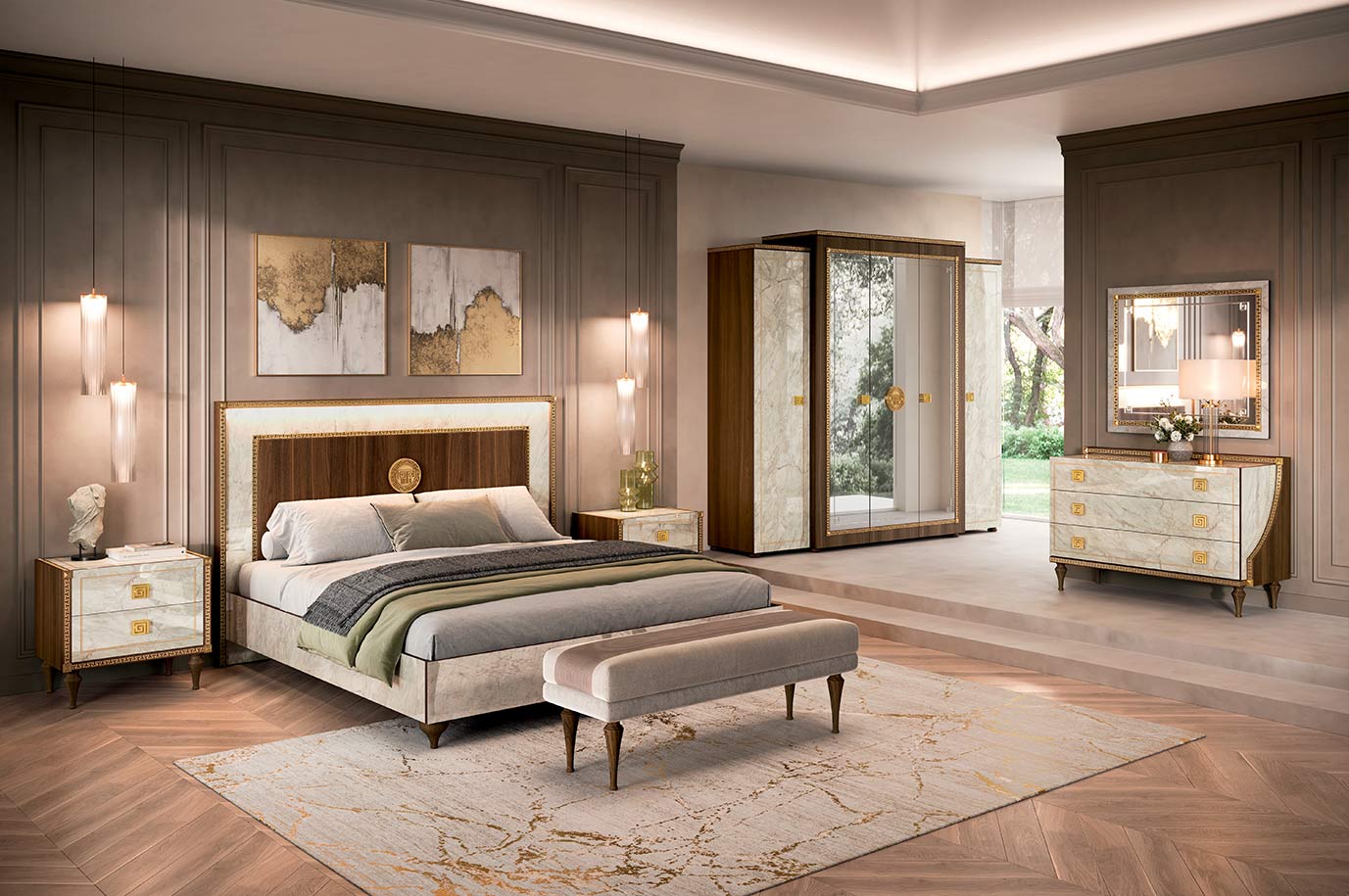
Romantica bedroom by Arredoclassic — classic Italian bedroom with walnut wood frame and Carrara marble surfaces
Romantica by Arredoclassic — a complete classic Italian bedroom where warm walnut tones and Carrara marble surfaces create a room that feels as considered as it does restful.

What Makes Italian Bedroom Design Distinctive

Italian furniture-making is rooted in centuries of craft tradition. The workshops of Brianza, the Veneto, and the hills surrounding Pesaro have long been synonymous with precision joinery, bespoke upholstery, and an innate sensitivity to proportion. A well-composed Italian bedroom does not shout for attention — it commands it through restraint, quality materials, and considered detailing.

Planning Your Italian Bedroom

  • Measure the room first and allow at least 60cm of clearance on each side of the bed for comfortable movement.
  • Let the bed lead the scheme, then coordinate wardrobes and bedside pieces to the same finish family.
  • Layer texture through bedding, curtains, and a rug rather than adding competing colours.
  • See headboard fabrics and lacquer finishes in person — tone and sheen are hard to judge from a screen.

Unlike the more minimal Scandinavian aesthetic or the maximalist flourishes of French Baroque, the Italian approach occupies a confident middle ground. Silhouettes are clean but never austere. Surfaces are tactile — velvet, lacquer, solid timber — but never cluttered. The overall effect is one of serene, unhurried luxury: a room that feels as though it has always been exactly this beautiful.

Colour palettes typically draw from a refined register — warm whites, deep graphites, caramel taupes, and the occasional jewel accent. A sapphire button-back headboard or an amber veneer panel gives a bedroom its personality without overwhelming the senses.

Headboard and Upholstery at a Glance

Finish Best For Effect in the Room
Upholstered fabric headboard A soft, enveloping focal point Warmth and quiet texture that calms the room
Eco-leather headboard Contemporary schemes and easy upkeep Clean lines with a subtle sheen and structure
Lacquer or walnut case pieces Wardrobes and bedside furniture Depth and cohesion when finishes are matched

The Statement Bed: Centrepiece of the Italian Bedroom

In Italian interior philosophy, the bed is non-negotiable as the focal point. It earns its position not merely through scale — though an upholstered king-size bedframe naturally anchors a room — but through the quality of its execution. When comparing models, look closely at the upholstery work, the materials used for the base and frame, the quality of the joinery, and how the piece is supplied. Construction details vary by collection, so it is worth confirming the specification of the exact bed you are considering.

Adora Interiors have built their reputation on precisely this: beds that feel as considered from behind as they do from the front, with a level of finishing that rewards close inspection. Their upholstered collections — including Atmosfera and Ambra — marry generous proportions with fabrics in bouclé, silk-touch velvet, and linen blends that invite you to slow down the moment you enter the room.

Camelgroup, another of Italy’s celebrated bedroom specialists, brings a more architectural sensibility to the headboard. Their designs — including the Alfieri collection — frequently incorporate integrated lighting: a soft LED strip recessed into the headboard frame that lends a hotel-like quality transforming the bedroom into a genuine retreat. Paired with floating bedside tables and a low-profile base, the effect is both dramatic and deeply liveable.

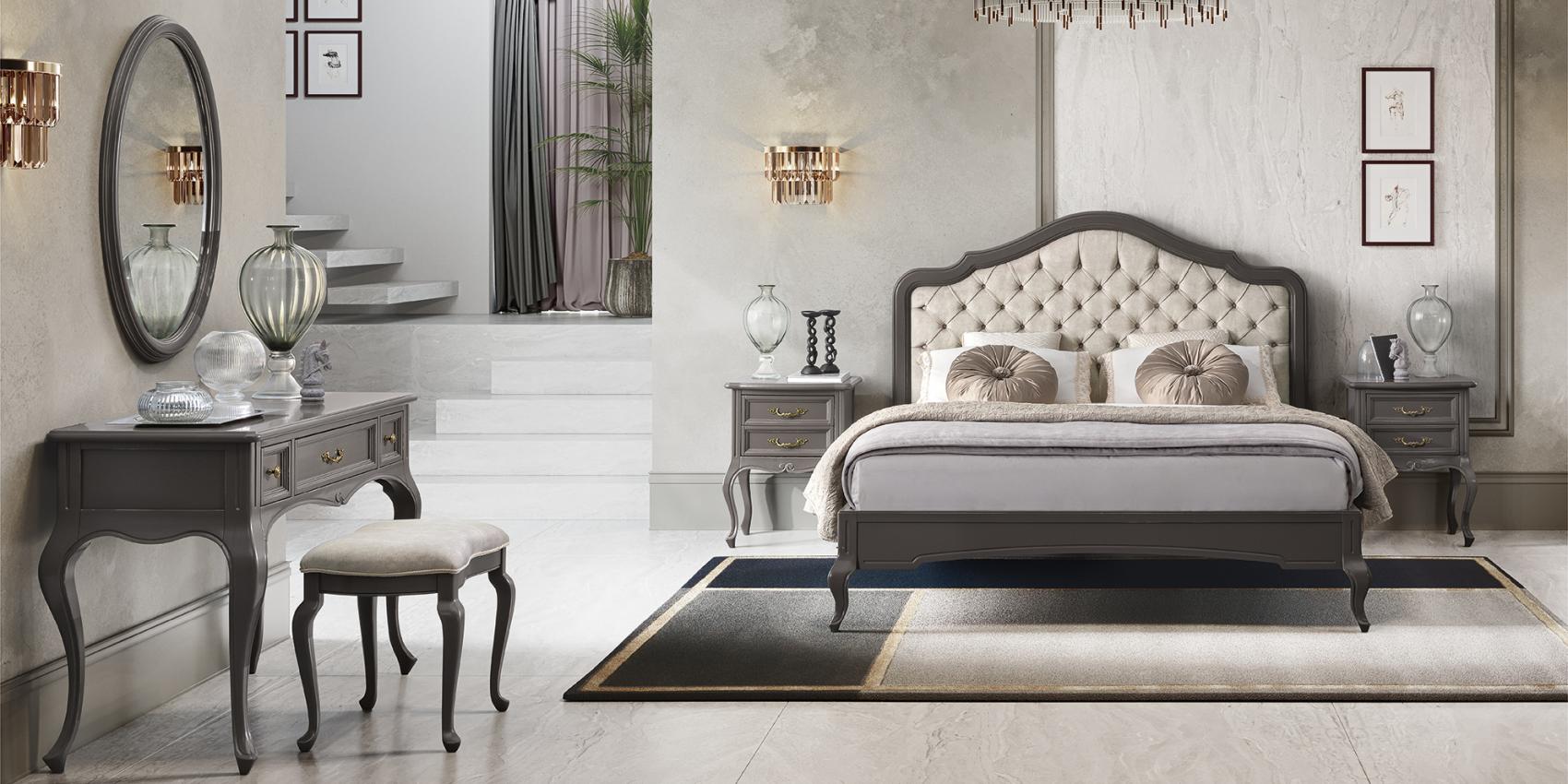
Verdi Italian bedroom set in a classic room — upholstered tufted headboard, matching nightstands and dressing table by Camelgroup
Verdi — a complete classic Italian bedroom by Camelgroup, where the bed, nightstands and dressing table share one decorative language.

The Verdi bedroom by Camelgroup shows a complete scheme working together: the tufted bed, matching nightstands and dressing table share a single decorative language.


Wardrobes as Works of Architecture

To the Italian eye, storage is never an afterthought. A wardrobe in an Italian bedroom is an architectural element in its own right — a piece that defines the geometry of the room as much as the bed itself. Fitted and freestanding wardrobes from Italian makers typically offer remarkable depth of customisation: mirrored or glass-fronted doors mirror the wider idea of using mirrors to bring light and structure to an Italian interior; internal LED illumination, velvet-lined drawers, and push-to-open mechanisms that eliminate the need for handles entirely.

Status Italia’s bedroom range demonstrates this approach with particular clarity. Their sliding-door wardrobe systems can be configured to span an entire wall, creating a seamless plane of high-gloss lacquer or wood-effect finish that reads more like a feature wall than a storage solution. Internally, each unit is as refined as its exterior — pull-out shoe racks, tie rails, and deep hanging sections meaning the wardrobe works as hard as it looks.

At Mondital, we stock a carefully chosen selection from Adora Interiors, Camelgroup, and Status Italia, all available to view at our London showroom.

A note from our showroom team: the wardrobe is the most underestimated decision in a bedroom scheme. Seeing the door mechanism, the internal configuration, and the finish quality in person changes the decision entirely.

Layering Texture and Tone

Even a finely made Italian bed frame needs the right context to work. Texture layering is the technique that separates a truly composed Italian bedroom from one that is merely well-furnished. Begin with the bed itself — an upholstered headboard in a tactile fabric — and build outwards.

A bedside table in a contrasting material introduces variety without discord: marble top against a lacquered base, or a smoked-glass surface on a solid oak frame. Soft furnishings deserve the same level of thought. Linen or cotton-sateen bedding in a tone that draws from the room’s palette, a textured throw at the foot of the bed, and a rug that grounds the composition — ideally in a low pile that does not compete with the furniture’s detailing.

Lighting is transformative. Integrated headboard lighting aside, consider bedside pendants hung from the ceiling rather than table lamps — they free up surface space and create a cleaner, more intentional silhouette. A dimmable overhead fitting, ideally recessed, completes the picture: a room that shifts effortlessly from bright and functional in the morning to warm and enveloping by evening.

View Italian Bedroom Collections


Experience It at Mondital

Creating a true Italian bedroom sanctuary is less about individual purchases and more about a sustained commitment to quality and composition. Every element — from the sweep of a wardrobe door to the weight of a drawer — should feel considered. That attention to proportion and finish is a defining quality of many well-made Italian bedroom collections.

At Mondital, we help customers compare styles, materials, and proportions so the bedroom they create feels right both aesthetically and practically. Whether you are furnishing a principal bedroom from scratch or seeking a single centrepiece, the aim is always the same — to find pieces that make the room.

Visit us in the showroom, explore our Italian bedroom furniture, or browse our wider range of Italian furniture collections.

Plan a Showroom Visit | Browse Bedroom Collections


arredoclassic-melodia-classic-living-room-gold-frieze-hero
The Verdi bedroom by New Trend Concepts — a complete classic Italian bedroom suite where carved detail and warm tones create a coherent, calming scheme.

Frequently Asked Questions

How do I choose the right bed size for an Italian bedroom?

Start with the room dimensions and allow at least 60cm of clearance on each side of the bed for comfortable movement. A king-size bed works well in most principal bedrooms but the proportions of the headboard matter as much as the bed size itself — a taller, more substantial headboard can make even a standard double feel like a statement piece. The showroom team can advise on which proportions suit your specific room.

Is leather or fabric better for an Italian upholstered headboard?

Both work well in different contexts. Fabric — particularly velvet, bouclé, or linen blends — brings warmth and texture that suits both classic and contemporary Italian bedrooms. Leather is more practical for daily contact and develops a patina over time that adds character. The right choice depends on the atmosphere you want to create and how the room is used.

Is it worth visiting the showroom before ordering Italian bedroom furniture?

Very often, yes. The scale of a wardrobe, the depth of a headboard, and the quality of a finish are all significantly easier to judge in person than from photographs. For many customers, the showroom visit is where a shortlist becomes a confident final decision.

Can Mondital help me create a complete Italian bedroom scheme rather than just individual pieces?

Yes. We help customers build complete bedroom schemes — bed, wardrobes, bedside tables, dressing tables, and storage — from coordinated Italian collections so every piece shares the same design language and finish. If you have existing pieces you want to work around, bring photographs or dimensions to the showroom and the team can advise accordingly.


Discover Italian Furniture by Room

Living | Dining | Bedroom | Sofas | View All


Mondital – Authorised Retailer of Over 20 Italian & Global Brands

Mondital is an authorised retailer of over 20 Italian and global furniture brands, each selected for their exceptional quality and outstanding value. Our team is here to help you choose the right pieces, whether you are gathering inspiration or ready to furnish your home.

Call Us: 020 8556 1221 | WhatsApp: Chat with us | Get in Touch | Get Directions
Share