

Written by the Mondital editorial team, with insight from our London showroom specialists in Italian furniture, upholstery, and bespoke interior planning.
Classic Italian interior design has endured because it is admired for its emphasis on craftsmanship, proportion, and decorative richness. If you have been drawn to the grandeur of hand-carved wood, the warmth of gold leaf detailing, and the opulence of rich silk and velvet fabrics, then classic Italian furniture in London homes is very much within reach — and more liveable than you might imagine.
This guide covers what defines the classic Italian aesthetic, how to incorporate it room by room, and how to make it work in a contemporary home without losing any of its inherent character.
If you would rather explore the collections first, you can browse classic Italian furniture or visit our London showroom to see the pieces in person.
Browse Classic Collections | Visit the Showroom
What Defines Classic Italian Style
Classic Italian design traces its roots to the Renaissance and Baroque periods, when Italian artisans elevated furniture-making to a fine art. The style is characterised by a sense of architectural formality — pieces that feel monumental yet graceful, with every curve and carving considered as carefully as a brushstroke on canvas.
At its heart, classic Italian style rests on three pillars: exceptional materials, meticulous craftsmanship, and harmonious proportion. Many classic Italian collections combine timber or timber-veneered structures with decorative carving, veneer work, gilded detailing, and rich upholstery. Materials and construction methods vary by collection, so it is worth confirming the specification of individual pieces. Gilded detailing can range from gold-leaf work to gold-toned decorative finishes and brass hardware, depending on the collection. Used selectively, these details can add warmth and formality without making the room feel heavy.
Upholstery plays an equally important role. Damask, brocade, velvet, and silk in deep jewel tones — sapphire blue, burgundy, forest green, ivory — lend warmth and texture, grounding the opulence of carved frames in something tactile and inviting.
Materials at a Glance
| Material | Best For | Effect in the Room |
|---|---|---|
| Carved walnut or cherry | Statement case pieces and bedsteads | Warmth, weight, and a sense of permanence |
| Gold leaf and gilded detail | Accent framing and decorative highlights | Luminosity and formality without heaviness |
| Damask, velvet, and silk upholstery | Sofas, headboards, and dining chairs | Tactile richness that grounds ornate frames |
Key Elements to Incorporate Room by Room
The beauty of classic Italian interior design is that it need not be all-or-nothing. Even a single statement piece — a carved console table in the hallway, a gilded mirror above a fireplace — an idea explored further in using mirrors to bring light and structure to an Italian interior — an idea explored further in — can elevate an entire room. Begin with the spaces you use most and build outward.
Where to Begin
- Start with the room you use most, and let a single statement piece set the tone before you build outward.
- Match the decorative language across pieces — carving style, finish, and upholstery family — so the room feels resolved rather than assembled.
- Balance ornate frames with restrained walls and flooring, letting the furniture be the focal point.
- See finishes and fabrics in person where you can — gold leaf, walnut grain, and silk read very differently in the room than on screen.
The Sitting Room
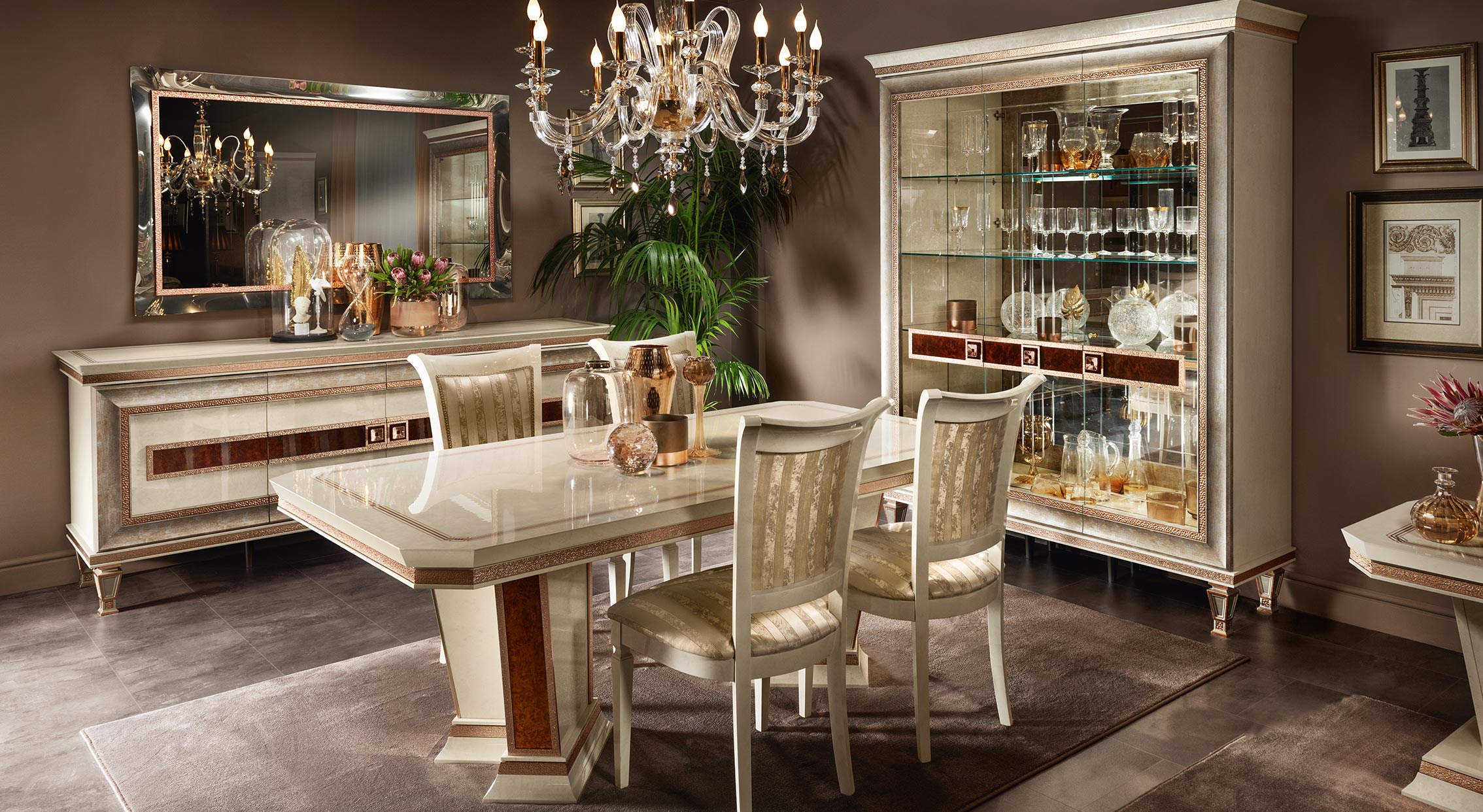
The Dolce Vita living room by Arredoclassic shows the style expressed through a sofa and display cabinet with art-deco symmetry.
The sofa and armchairs form the centrepiece. Look for frames with cabriole legs and scroll arms, upholstered in a rich fabric that complements your existing colour palette — the Athena Gold and Cleopatra collections are strong starting points. A matching coffee table with a marble or inlaid wood top anchors the seating arrangement. Layering in table lamps with ceramic or gilded bases, and adding decorative cushions in complementary textures, helps the room feel curated rather than staged.
The Dining Room
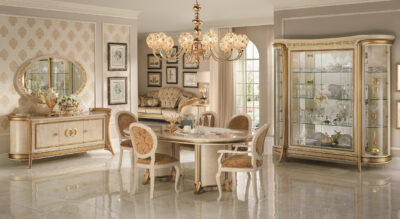
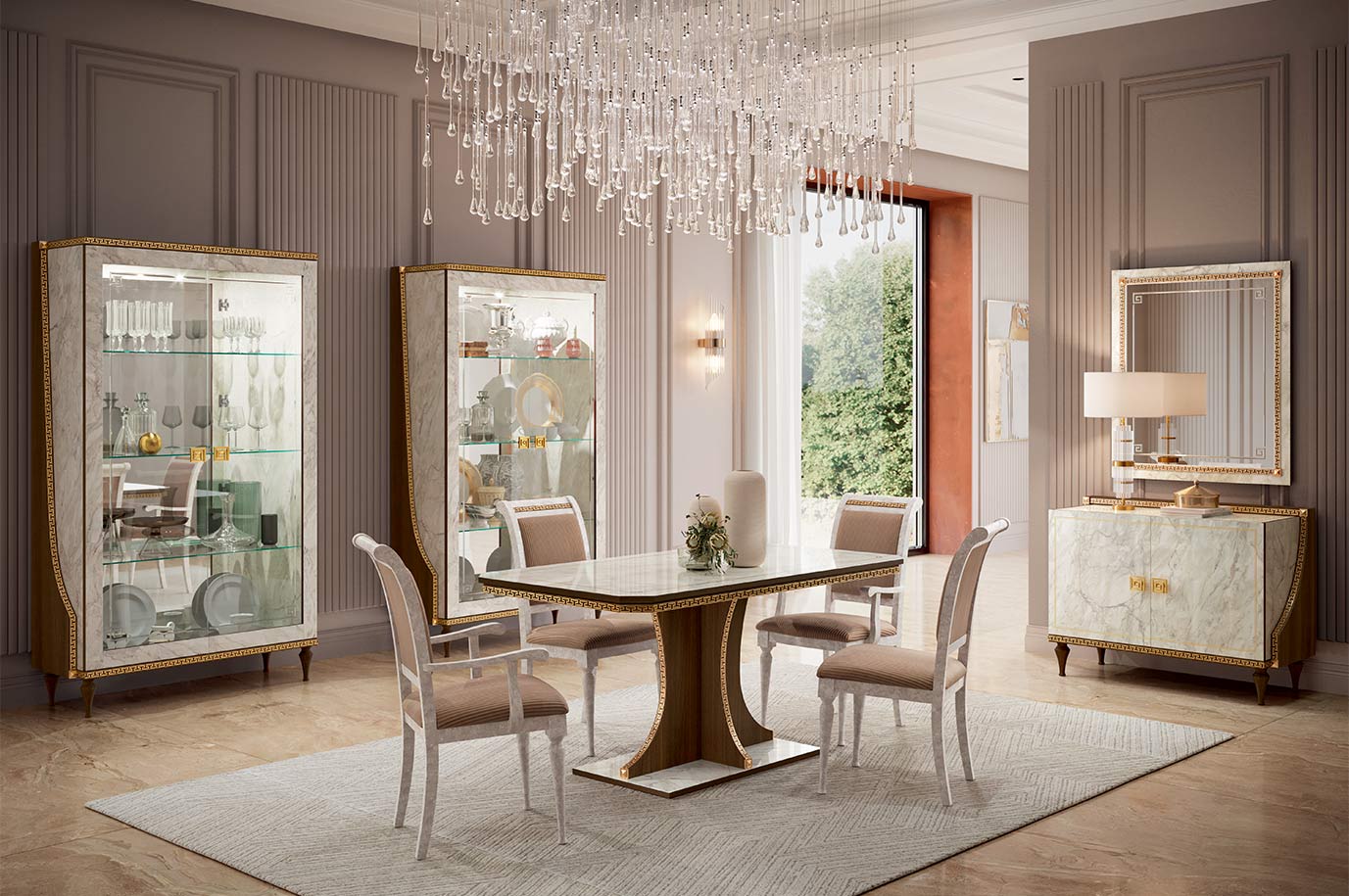
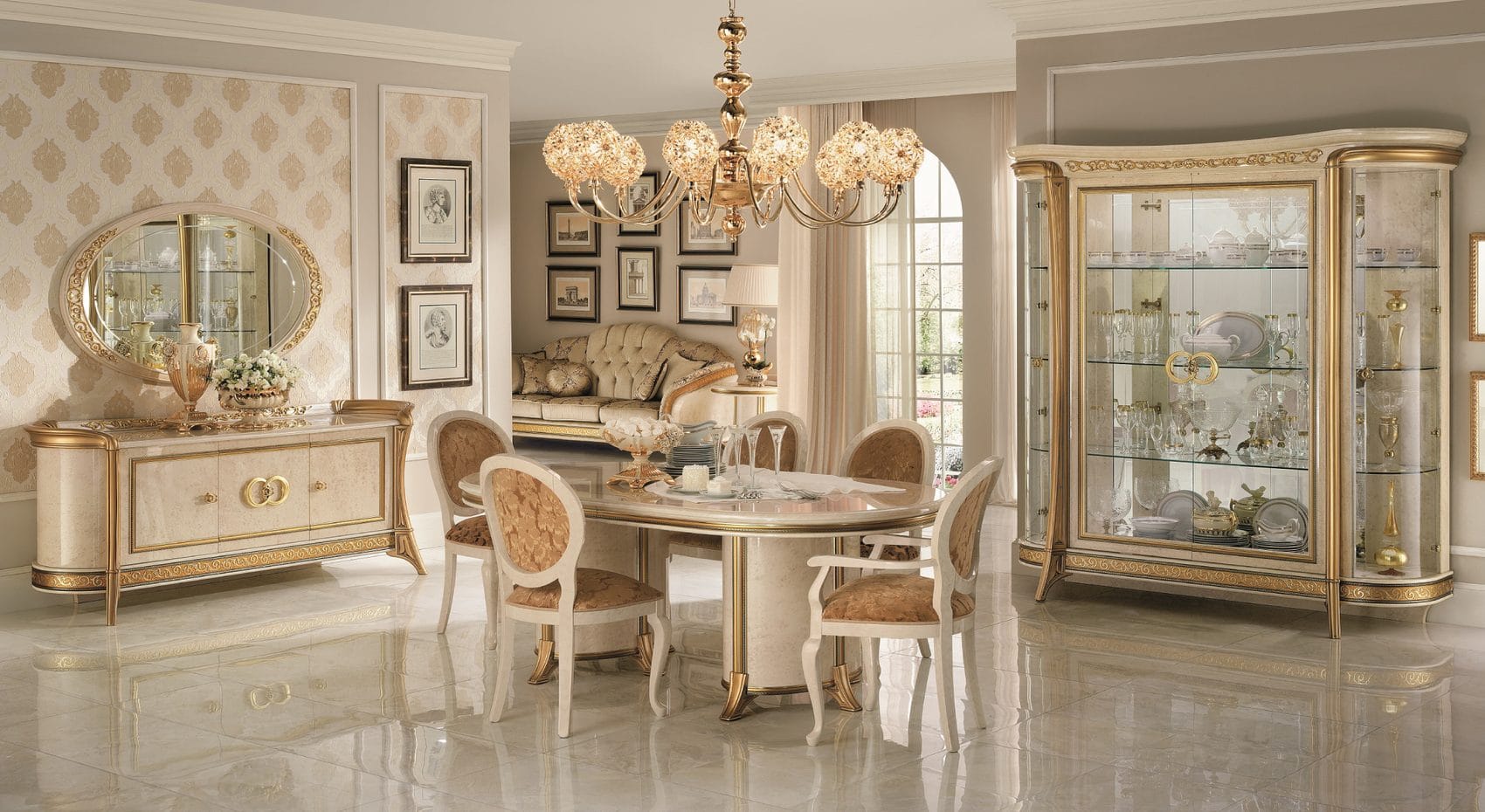
An extending table in solid walnut or mahogany, surrounded by high-backed upholstered chairs, creates an atmosphere of formal elegance — ideal for entertaining. A matching credenza or display cabinet allows you to showcase fine china or crystal while keeping the room feeling composed rather than crowded.
The Bedroom
For the finished result, see The Art of the Italian Bedroom — a guide to building a bedroom that feels composed rather than crowded.
For the finished result, see — a guide to building a bedroom that feels composed rather than crowded.
A carved bedstead with a generous upholstered headboard, partnered with matching bedside tables and a wardrobe featuring inlaid panels or bevelled mirrors, transforms the room into a private sanctuary. The Romantica collection from Arredoclassic demonstrates how a complete classic bedroom scheme — where every piece shares the same decorative language — creates a room that feels entirely resolved.

Arredoclassic and Adora Interiors
When sourcing classic Italian furniture in London, two names stand apart for their commitment to quality: Arredoclassic and Adora Interiors. Both draw on long traditions of Italian furniture-making. Where production takes place, it is within established Italian workshops; specific manufacturing locations vary by collection, so confirm provenance for the piece you are considering.
Arredoclassic produces complete room collections designed with extraordinary coherence. Their finishes range from antique white with gold leaf to rich dark walnut, ensuring there is a collection to suit a variety of interior schemes — from the formal grandeur of Melodia and Leonardo to the softer, more decorative character of Romantica and Dolce Vita.
Adora Interiors brings a similarly rigorous approach, with collections that balance classic ornament with contemporary living needs, making them particularly well-suited to London townhouses and period apartments where a fully formal scheme might feel impractical.
You can explore both brands in full on their dedicated Mondital pages — Arredoclassic and Adora — where each range is presented room by room and finish by finish.
Mixing Classic Italian Pieces With a Contemporary Setting
One of the most common questions we hear from London customers is whether classic Italian furniture can work in a modern home. The answer is an emphatic yes. Some of the most striking interiors we have seen place a single beautifully carved sideboard or a pair of classic upholstered armchairs against clean white walls and polished concrete floors. The contrast between the ornate and the minimal creates a tension that feels entirely current.
The key is to let the classic piece be the star. Keep surrounding furniture simple and architectural, allow the floor space around it to breathe, and echo one element from the classic piece — perhaps its finish, a gilded detail, or a fabric tone — elsewhere in the room in a more restrained way. A cushion that picks up the gold of a carved frame, or a pendant light with a warm brass finish, is enough to create harmony without tipping into pastiche.
The Prestige and Athena Gold collections work particularly well in this way — their proportions and finishes are refined enough to sit comfortably in contemporary settings without losing any of their inherent grandeur. This approach is ideal for modern London apartments where a fully period-style room is impractical, and it allows you to build your collection gradually, adding pieces over time.
Practical Advice for London Homes
Well-made classic furniture can remain in use for many years when chosen and cared for well, which makes the investment genuinely worthwhile — but there are a few considerations worth keeping in mind. Proportion matters above everything else. These pieces are designed for rooms with generous ceiling heights and adequate floor space. Always measure carefully and consider scale before committing to a collection.
Lighting is your greatest ally in a classic Italian interior. Wall sconces, chandelier-style pendants, and table lamps with warm-toned bulbs will bring out the depth of carved wood and the gleam of gilded details in a way that cold or overhead lighting cannot. Natural light, reflected by strategically placed mirrors, further enhances the sense of warmth and grandeur.
Do not overlook the supporting cast of accessories. Ornate picture frames, decorative mirrors, and sumptuous window treatments in lined silk or velvet complete the effect. The aim is layered richness, not clutter — every object should earn its place and contribute to the overall composition.
Browse Classic Italian Furniture Collections
Experience It at Mondital
Whether you are furnishing a period property or bringing timeless elegance to a contemporary flat, classic Italian furniture offers one of the clearest paths to a space that feels both luxurious and deeply personal.
At Mondital, we help customers compare styles, finishes, and proportions so the pieces they choose feel entirely right — aesthetically, practically, and over the long term. Visit us in the showroom, explore our classic Italian furniture collections, or speak to the team for tailored advice on which collections suit your home.
Plan a Showroom Visit | Browse All Collections
Frequently Asked Questions
How do I know if classic Italian furniture will suit my home?
Classic Italian furniture works in a wider range of homes than most people assume. Period properties with high ceilings and generous rooms are the natural setting, but a single well-chosen classic piece can work beautifully in a contemporary flat — particularly when placed against simple, architectural surroundings that let the craftsmanship speak for itself. The showroom team can advise on which collections suit specific room types and ceiling heights.
Is classic Italian furniture practical for everyday use?
Yes, when the quality is appropriate. Well-made classic Italian furniture — with solid hardwood frames, quality upholstery, and properly finished surfaces — can remain in use for many years when chosen and cared for well. The investment can be significant, but a well-chosen piece that is cared for appropriately can remain part of a home for many years. Compare the specification, finish, upholstery, and care guidance for the exact piece rather than relying on general assumptions about a style or brand.
Is it worth visiting the showroom before ordering classic Italian furniture?
Yes — more so than almost any other category. The scale of a carved dining table, the depth of an upholstered sofa frame, and the quality of a gold leaf finish are all significantly harder to judge from photographs than from the piece itself. For most customers, the showroom visit is where the decision moves from consideration to confidence.
Can Mondital help me mix classic Italian pieces with my existing contemporary furniture?
Yes. This is one of the most common briefs we work with and one of the most rewarding outcomes. The key is choosing the right piece to lead the room — typically a sofa, dining table, or wardrobe — and letting everything else support it. The team can advise on which collections have the proportions and finishes to sit well alongside contemporary furniture without either dominating or being overwhelmed by it.
Mondital – Authorised Retailer of Over 20 Italian & Global Brands
Mondital is an authorised retailer of over 20 Italian and global furniture brands, each selected for their exceptional quality and outstanding value. Our team is here to help you choose the right pieces, whether you are gathering inspiration or ready to furnish your home.
Call Us: 020 8556 1221 | WhatsApp: Chat with us | Get in Touch | Get Directions
