Written by the Mondital editorial team, with insight from our London showroom specialists in Italian furniture, upholstery, and bespoke interior planning.
A corner sofa and a chaise sofa solve different spatial problems. A corner sofa establishes a shared seating zone, often with an L-shaped return that defines the edge of a room. A chaise sofa extends a conventional sofa with a longer seat section at one end, giving one person a place to stretch out without committing to a full corner footprint. The right choice depends less on appearance and more on circulation, sightlines and how the household actually uses the space.
This guide compares corner and chaise configurations so you can choose the layout that fits your room, not simply the shape you like in a photograph.
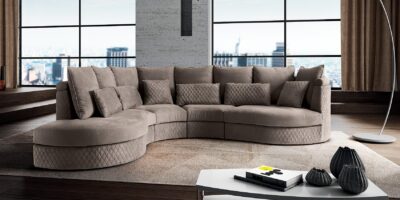
New York — A larger sectional can define a seating area clearly, provided the room still retains comfortable routes around it.
Begin With the Job the Sofa Needs to Do
Start with whether the room needs more people to sit together or one dedicated lounging position. A corner sofa suits households that entertain or gather often; a chaise suits someone who wants to recline without taking over the room. The decision should follow the plan, not the product photo.
Before you choose, check these four things
Measure the full footprint, including the return of a corner sofa or the extended chaise section.
Mark the route from the doorway to the main seating area, window, kitchen or garden door.
Decide which direction the chaise or return should face before selecting a left-hand or right-hand configuration.
Check the delivery route, including staircases, tight hallways, turns and lift access where relevant.
Corner Sofas Create a Social Centre
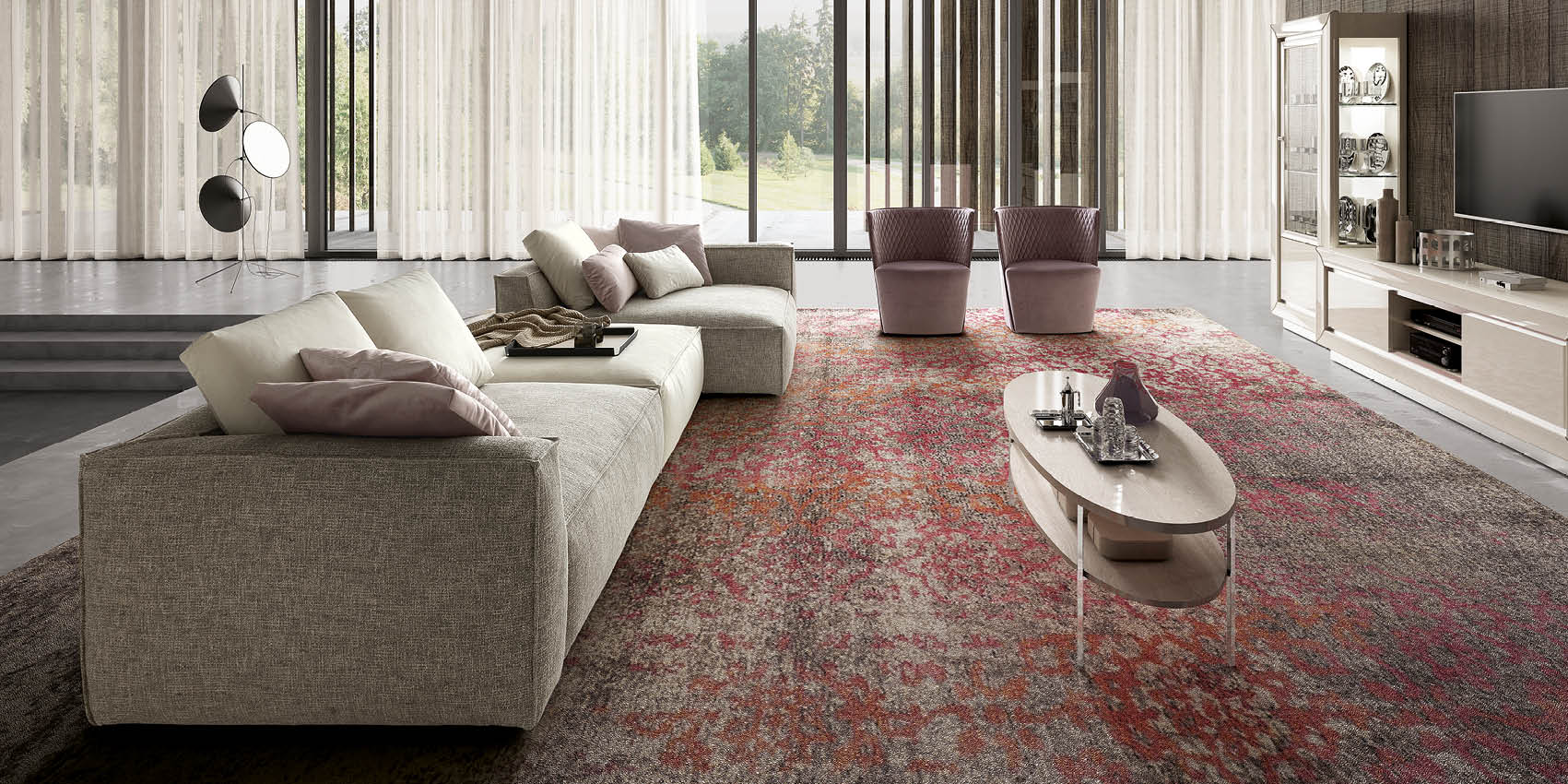
An L-shaped sofa can define living space in an open-plan room and reduce the need for separate chairs. In the right room it makes a clear, generous centre. The risk is oversizing: a return that blocks a fireplace, curtains or the main pathway turns a good sofa into a circulation problem. The Piuma Italian corner sofa is one example of a modular sectional within the Mondital range, useful where an open-plan room needs definition.
Piuma — A low modular profile can define an open-plan room while leaving clear routes around the seating and keeping the architecture visible.
Chaise Sofas Offer Lounge Comfort With a Lighter Footprint
A chaise often suits narrower rooms because it adds a reclining position without a full return. Orientation matters: facing the fireplace, window, garden or television each changes how the seat is used, and the chaise should avoid the main traffic route. Where space is limited, a chaise can feel more resolved than a corner that dominates the room.
Configuration
Often suits
Effect in the room
Corner sofa
Open-plan rooms, larger family spaces and frequent entertaining
Creates a clear shared seating zone and can reduce the need for extra chairs
Chaise sofa
Narrower rooms or households prioritising lounging space
Adds a relaxed reclining position while keeping a lighter overall footprint
Modular configuration
Rooms likely to change layout or use over time
Offers more flexibility, subject to the specific collection and available modules
New York — The chaise end changes how a sofa is used day to day, turning one seat into a more relaxed place to read, rest or watch television.
Plan the Layout Before Falling in Love With the Shape
A simple floor plan prevents most layout regrets. Note wall lengths, doorway positions, radiators, fireplaces, windows and the primary circulation path before choosing. The chaise or return direction should follow the room, not the brochure.
A note from our showroom team: bring a simple floor plan, even if it is hand-drawn. Knowing the wall lengths, doorway positions and preferred chaise direction can prevent an otherwise excellent sofa from becoming the wrong configuration.
Choose for Everyday Habits, Not Occasional Moments
Aspiration and routine differ. A sofa bought for occasional entertaining should still work on an ordinary Tuesday. The upholstery decision is covered in the leather-versus-fabric guide, and the broader selection process in the main sofa-choice guide. Choose the configuration for how the room is used most of the time.
Compare Configurations at Mondital
Proportions, seat depths and visual weight read differently in person. Comparing a corner and a chaise side by side, against your measurements, makes the trade-off clear. At Mondital’s Italian furniture showroom in London, the team can help you weigh left-hand and right-hand layouts, circulation and the configuration that best suits your space.
Mondital offers free white-glove delivery across London and the Home Counties, with delivery to the rest of the UK and internationally arranged for a charge or through a trusted shipping partner.
Is a corner sofa suitable for a small living room?
A corner sofa can work in a smaller room if its footprint leaves clear routes around doors, windows and the main seating area. However, it can quickly dominate a narrow reception room, so a chaise sofa or compact modular option may be more appropriate where circulation is limited.
Which is better for lounging, a corner sofa or a chaise sofa?
A chaise sofa is often better for one person who wants a dedicated reclining position. A corner sofa is generally better for several people sitting together, although the best choice depends on how the household uses the room and the specific sofa configuration.
Is it worth visiting the showroom before ordering?
Yes. Seeing a corner sofa and chaise sofa in person makes it easier to judge their real footprint, seat depth and visual weight. Bring room measurements or a simple plan so the Mondital team can discuss which configuration is likely to work best.
Can Mondital help me choose the correct chaise direction or corner return?
Yes. Bring photographs, key dimensions and the position of doorways, windows and the main focal point in the room. The Mondital team can help you consider left-hand or right-hand layouts, circulation routes and the configuration that best suits your space.
Mondital – Authorised Retailer of Over 20 Italian & Global Brands
Mondital is an authorised retailer of over 20 Italian and global furniture brands, each selected for their exceptional quality and outstanding value. Our team is here to help you choose the right pieces, whether you are gathering inspiration or ready to furnish your home.
Written by the Mondital editorial team, with insight from our London showroom specialists in Italian furniture, upholstery, and bespoke interior planning.
Upholstery is central to both the experience and the visual effect of a sofa. The surface you choose shapes how the seat feels day to day, how the colour reads in your light, and the overall character of the room. Neither leather nor fabric is universally superior. The useful question is which material suits the way the room is used, the light it receives and the atmosphere you want to create.
This guide compares leather and fabric Italian sofas so you can choose with confidence, rather than defaulting to a material without weighing the everyday differences.
Piuma — a modular Camelgroup sofa whose fabric upholstery layers texture and tone across an open plan.
The Piuma modular sofa by Camelgroup shows how a fabric sectional can define a relaxed, layered living space.
The Piuma living room shows fabric at its most decorative: a modular sectional layers pattern and warmth in a way leather rarely achieves.
Start With How the Sofa Will Be Used
The best material depends on ordinary habits rather than assumptions. A sofa used every day by a busy household faces different demands from one in a formal sitting room used mainly for entertaining. Strong direct sunlight, soft north-facing light and changing daylight across the day all affect how a finish looks and wears. The aim is to match the material to the life of the room, not to a generic idea of quality.
Questions to ask before choosing upholstery
Will the sofa be used every day, or mainly for entertaining and occasional sitting?
Does the room receive strong direct sunlight, soft north-facing light, or changing light across the day?
Are children, pets, food and drinks part of everyday life in the room?
Do you want the sofa to feel tailored and structured, or soft and textural?
Leather can offer a smoother, more structured surface; fabric offers a broader range of tactile and visual effects. The two are not interchangeable, and finishes vary within each material, so the specific maker’s care guidance should always be followed.
Leather Brings Structure, Patina and Visual Calm
Leather tends to suit tailored rooms, busy households and schemes built around timber, stone or panelling. In a period room with a fireplace or original joinery, a warm leather tone can relate directly to the existing materials. Cognac, tobacco, warm neutrals, stone, cream, grey and darker tones each read differently against a wall and across the day, so the exact finish matters more than the word “leather” alone.
Care is material-specific. Avoid prolonged direct sun or strong heat where appropriate, and follow the manufacturer’s guidance for cleaning and conditioning. Leather is not maintenance-free, and types differ in how they respond to daily life.
The Eghoiste leather sofa shows how a smooth, contemporary hide reads against pale, minimalist interiors.
The Eghoiste leather sofa shows how a smooth, contemporary hide gives a tailored, structured presence — the counterpoint to the layered fabric schemes shown elsewhere on this page.
Fabric Creates Warmth, Colour and a More Layered Room
Woven fabric, velvet and other textured upholstery give a softer, more layered result and a wider colour range. Velvet or a quilted fabric catches side light in a way smooth leather does not, which can add depth to a pale room. None of these is objectively superior; the choice depends on the atmosphere you want and how the room is used.
Upholstery
Often suits
Effect in the room
Leather
Tailored rooms, busy households and schemes with timber or stone
Structured, grounded and capable of developing individual character over time
Woven fabric
Relaxed living rooms and softer contemporary interiors
Warm, tactile and easy to layer with rugs, curtains and cushions
Velvet or textured fabric
Rooms needing colour, depth or a stronger focal point
Rich, light-responsive and more decorative without requiring ornate furniture
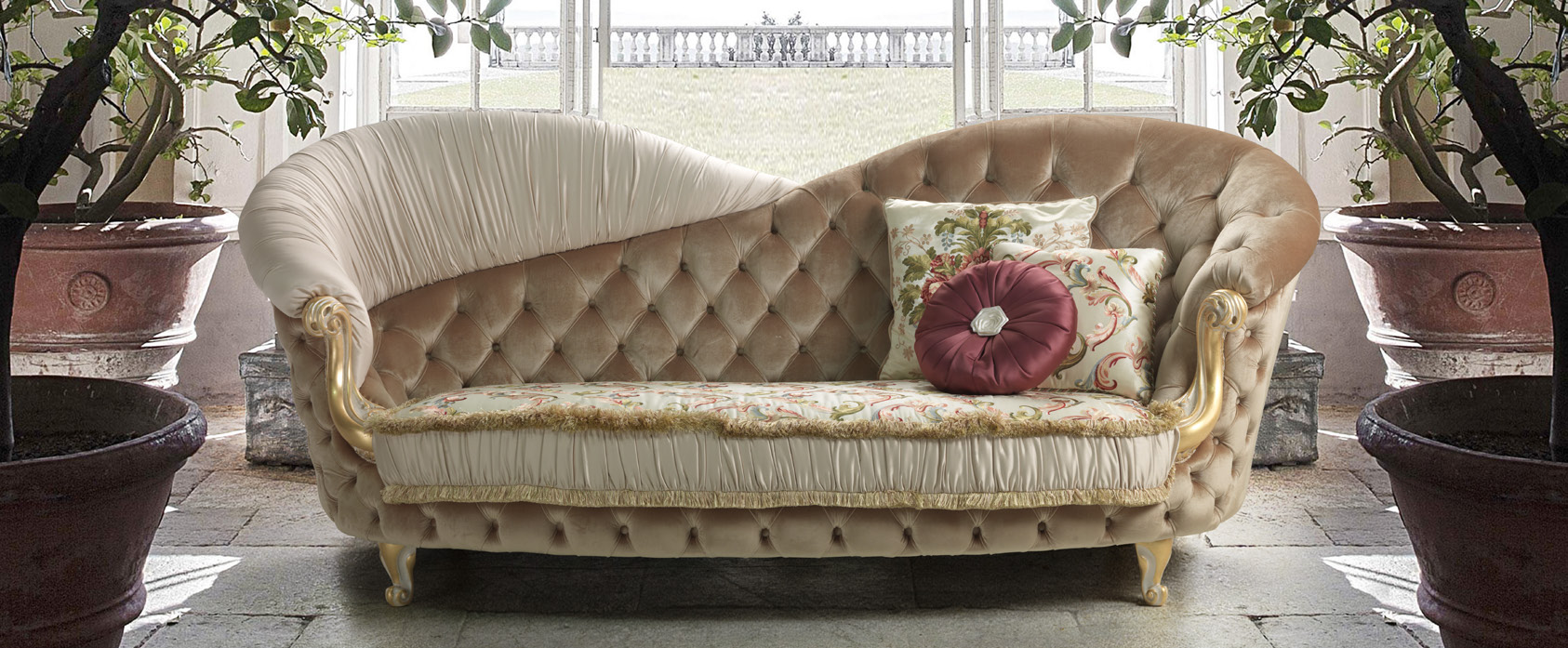
Grace — a classical tufted fabric sofa, showing how woven upholstery adds warmth and a decorative, light-responsive surface.
Think About Light, Colour and the Wider Scheme
Small swatches and product photos are insufficient on their own because both leather and fabric change under different light. A colour that looks right in a bright showroom can read cooler or warmer at home, and texture behaves differently beside your own walls and flooring.
A note from our showroom team: compare large upholstery samples beside photographs of your room and, where possible, hold them against your own wall colour before deciding. The difference between showroom light and home light can be decisive.
The decision is personal, not hierarchical. A household that wants a tailored, wipe-clean surface may prefer leather; one that values softness, colour range and a layered room may prefer fabric. Where the broader selection process is concerned, the main sofa-choice guide covers measuring, access and overall proportion, and the corner-versus-chaise guide covers layout once the material is decided.
Experience Leather and Fabric at Mondital
Photographs cannot convey the feel of a leather grain or the softness of a weave. Seeing and touching both in person, beside your own samples, makes the trade-off concrete. At Mondital’s Italian furniture showroom in London, customers can compare seat comfort, upholstery and colour against the room measurements and finishes they bring.
Mondital offers free white-glove delivery across London and the Home Counties, with delivery to the rest of the UK and internationally arranged for a charge or through a trusted shipping partner.
Neither is universally better. Leather often suits customers who want a smoother, more tailored surface and a material that can develop character over time. Fabric is often preferred for its warmth, texture and broader colour range, so the right choice depends on the room, your household and the atmosphere you want to create.
Is leather a good choice for a busy family room?
Leather can be a practical option for a busy room because its surface is easier to wipe after minor spills than many fabrics. However, leather types vary, and all upholstery should be cared for according to the manufacturer’s guidance. Customers with children or pets should discuss their day-to-day needs when comparing options.
Is it worth visiting the showroom before ordering?
Yes. Seeing leather and fabric in person makes it easier to judge texture, colour, seat comfort and the visual weight of the sofa. Bringing photographs and samples from your home can also help you compare upholstery in relation to your own light and existing finishes.
Can Mondital help me choose upholstery for my room?
Yes. Bring room photographs, approximate dimensions and any paint, flooring or curtain samples you are considering. The Mondital team can help you compare leather, fabric and colour options in relation to your room’s architecture, light and everyday use.
Mondital – Authorised Retailer of Over 20 Italian & Global Brands
Mondital is an authorised retailer of over 20 Italian and global furniture brands, each selected for their exceptional quality and outstanding value. Our team is here to help you choose the right pieces, whether you are gathering inspiration or ready to furnish your home.
Written by the Mondital editorial team, with insight from our London showroom specialists in Italian furniture, upholstery, and bespoke interior planning.
British homes often arrive with a strong architectural point of view before a single piece of furniture is chosen. Sash windows, cornicing, fireplaces, bay windows, picture rails, timber floors, compact front reception rooms and the clean, blank volumes of newer apartments each set a different stage for a sofa. The most resolved rooms do not try to erase those characteristics. They choose furniture that allows the architecture to remain part of the composition.
Italian sofas can sit well in this context because the range of silhouettes is wide, from clean-lined contemporary forms to more decorative classic profiles. The aim here is not to present Italian design as universally superior, nor to suggest that every British home needs an Italian sofa. Rather, this guide explains how to balance modern Italian lines with period character through proportion, silhouette, colour, light and the supporting furniture around the piece.
This guide explains how to make an Italian sofa feel considered within British architecture, from period reception rooms to contemporary apartments.
Mozart — A sofa and armchair arrangement can complement a more traditional room when the silhouette, scale and surrounding finishes remain balanced.
Read the Architecture Before Choosing the Sofa
The architecture gives the starting constraints. Ceiling height and window proportions affect how visually weighty a sofa appears in the room. Fireplaces, bays and original joinery can already establish a focal point that the furniture should acknowledge rather than obscure. A modern apartment may offer fewer built-in cues, so the sofa may need to introduce warmth, character or texture without making the room feel over-furnished. A small front reception room and a large open-plan rear extension should not be treated as the same setting, even when they belong to the same home.
The point throughout is visual balance, not a set of rigid rules. Whether a particular Italian sofa works in a Georgian, Victorian or Edwardian room depends on its scale, line, material, colour and placement — not on the style label alone.
Four questions to ask about the room
Which architectural feature should remain the room’s main focal point?
Does the sofa need to sit beneath a window, beside a fireplace, within a bay, or on a clear wall?
Is the room formal, relaxed, open-plan or used for several different purposes?
Which routes through the room must stay clear once the sofa is in place?
This is a styling guide rather than a measurement exercise. For wider sofa-selection and room-planning advice, the broader choice guide covers measuring, access and overall proportion in more detail.
Pair Period Detail With the Right Visual Weight
The key styling principle is contrast that flatters rather than competes. In a room with cornicing, sash windows and a fireplace, a sofa with a clean profile can offer useful calm when its scale does not obscure the room’s original features. A more classically detailed silhouette may work well where the room has generous proportions and the detailing relates to the architecture without becoming overly literal.
In a new-build, a richer fabric, considered profile or more expressive silhouette can give a room character when the architecture is intentionally plain. Avoid the simplistic prescription that an old home must take a classic sofa and a new home a modern one. Both directions can work if the scale, material and palette stay coherent.
Decor — A transitional arrangement can bridge period detail and cleaner modern lines, useful where a room mixes old and new elements.Mozart — A sofa and armchair arrangement can complement a more traditional room when the silhouette, scale and surrounding finishes remain balanced.Piuma — A low, restrained silhouette can sit comfortably within a light-filled British room when the surrounding proportions remain visible.
Use Colour and Material to Work With British Light
British daylight is often soft and variable, and it changes how upholstery reads. Warm neutrals such as oat, stone and mushroom can help a sofa settle into smaller or quieter rooms. Deep velvet or textured upholstery may create depth in rooms with pale walls, but should be assessed against the room’s actual daylight rather than assumed. Cognac, tan and similarly warm leather tones can relate well to timber, brick and traditional architectural details, subject to the exact leather finish and the wider scheme. Swatches are best considered in the home’s own light rather than solely under showroom lighting.
Palette or material direction
Often works well in
Effect to aim for
Warm neutrals such as oat, stone and mushroom
Smaller rooms or rooms with softer daylight
A quieter, more integrated base for existing architecture
Deep velvet or textured upholstery
Rooms with pale walls or a need for stronger visual depth
A richer focal point without relying on ornate furniture
Warm-toned leather
Rooms with timber, brick, traditional joinery or warmer light
A grounded contrast that can connect with natural materials
Avoid the blanket claim that leather always ages beautifully, that velvet always performs well, or that a single colour will work in every north-facing room. The material decision is covered in more detail in the leather-versus-fabric guide.
Mix New Upholstery With What You Already Own
Position the sofa as a considered anchor, not an instruction to replace every other item in the room. A sofa can relate to existing pieces through wood tone, metal finish, upholstery colour, the formality of its silhouette, texture and the visual space left around it. Mondital does not offer a full interior-design service; the showroom team can, however, help customers compare upholstery, scale and finishes against the photographs, dimensions and samples they bring.
Make the room feel intentional
Leave enough visual and physical breathing space around a sofa.
Repeat one or two material or colour notes from the sofa elsewhere, rather than matching every item exactly.
Use a rug, lighting and occasional seating to establish a seating zone.
Let original features remain visible where possible rather than filling every wall.
Piuma — a modular Italian sofa arranged for relaxed family living, showing how a flexible layout suits British open-plan rooms.Piuma — a modular Italian sofa arranged for relaxed family living, showing how a flexible layout suits British open-plan rooms.
The Piuma modular sofa shows how a flexible, reconfigurable layout suits the open-plan living rooms common in British homes.
Plan Around Light, Not Just the Floor Plan
Sofas read differently across the day and in direct versus diffused daylight. Side lighting can reveal texture and shape in ways a single overhead light may not. A swatch, a room photograph and approximate wall and floor dimensions make a showroom comparison more useful than a product image alone.
A note from our showroom team: bring a paint swatch or a photo of your room. Matching the sofa to your actual light saves the disappointment of a colour that looked right in the showroom but wrong at home.
A British Room Does Not Need to Be Styled as a Set
An Italian sofa is most persuasive in a British home when it respects the room’s proportions and joins an existing material and architectural conversation, rather than arriving as a complete scheme. A general scenario makes the point better than a prescriptive model: a low contemporary sofa beneath a tall sash window can let the window keep its presence, while a more traditional room may welcome a sofa and armchair pairing that echoes its existing detailing. The test is whether the piece feels placed, not whether it matches a formula.
For related reading, our classic Italian style guide explores a more traditional direction in fuller detail.
See Italian Sofas in Context at Mondital
Photographs show a sofa’s general character but not its proportions, seat depth, upholstery texture or relationship to surrounding furniture. Seeing a shortlist in person lets you judge those details with your own room in mind. At Mondital’s Italian furniture showroom in London, customers can compare scale, seat comfort, fabric, leather and visual character using the photographs, samples and room measurements they bring.
Mondital offers free white-glove delivery across London and the Home Counties, with delivery to the rest of the UK and internationally arranged for a charge or through a trusted shipping partner.
Can an Italian sofa work in a small British living room?
Yes. A compact two-seater or a low-profile model can make a small room feel considered rather than cramped. The key is proportion: choose a frame that fits the room’s footprint, preserves the main sightlines and leaves comfortable routes through the space.
What colour Italian sofa works best in British light?
There is no single best colour, because daylight, wall colour and existing finishes vary between homes. Warm neutrals such as oat, stone and mushroom can work well in softer light, while deeper tones or textured upholstery may add depth in a room with pale walls. Compare large samples with your own room photographs before deciding.
Is it worth visiting the showroom before ordering an Italian sofa?
Yes. Scale, seat depth, texture and the way a colour responds to light are easier to judge in person than from a photograph. Bringing room dimensions, photographs and relevant paint or flooring samples can make the comparison more useful.
Can Mondital help match a sofa to my existing furniture?
Yes. Bring photographs, key room dimensions and, where possible, paint, flooring or fabric samples. The showroom team can help you compare sofa scale, upholstery and finishes in relation to the furniture and architectural features already in your room.
Mondital – Authorised Retailer of Over 20 Italian & Global Brands
Mondital is an authorised retailer of over 20 Italian and global furniture brands, each selected for their exceptional quality and outstanding value. Our team is here to help you choose the right pieces, whether you are gathering inspiration or ready to furnish your home.
Written by the Mondital editorial team, with insight from our London showroom specialists in Italian furniture, upholstery, and bespoke interior planning.
There is something unmistakably elevated about an Italian bedroom. Whether it is the hand-finished lacquer of a statement headboard, the cool depth of marble-effect surfaces, or the deep grain of solid walnut — the level of artistry that defines well-made Italian bedroom furniture. At Mondital, we have spent years curating pieces from some of Italy’s most respected makers. In this guide we share what truly defines the Italian bedroom aesthetic and how to bring it home.
Italian furniture-making is rooted in centuries of craft tradition. The workshops of Brianza, the Veneto, and the hills surrounding Pesaro have long been synonymous with precision joinery, bespoke upholstery, and an innate sensitivity to proportion. A well-composed Italian bedroom does not shout for attention — it commands it through restraint, quality materials, and considered detailing.
Planning Your Italian Bedroom
Measure the room first and allow at least 60cm of clearance on each side of the bed for comfortable movement.
Let the bed lead the scheme, then coordinate wardrobes and bedside pieces to the same finish family.
Layer texture through bedding, curtains, and a rug rather than adding competing colours.
See headboard fabrics and lacquer finishes in person — tone and sheen are hard to judge from a screen.
Unlike the more minimal Scandinavian aesthetic or the maximalist flourishes of French Baroque, the Italian approach occupies a confident middle ground. Silhouettes are clean but never austere. Surfaces are tactile — velvet, lacquer, solid timber — but never cluttered. The overall effect is one of serene, unhurried luxury: a room that feels as though it has always been exactly this beautiful.
Colour palettes typically draw from a refined register — warm whites, deep graphites, caramel taupes, and the occasional jewel accent. A sapphire button-back headboard or an amber veneer panel gives a bedroom its personality without overwhelming the senses.
Headboard and Upholstery at a Glance
Finish
Best For
Effect in the Room
Upholstered fabric headboard
A soft, enveloping focal point
Warmth and quiet texture that calms the room
Eco-leather headboard
Contemporary schemes and easy upkeep
Clean lines with a subtle sheen and structure
Lacquer or walnut case pieces
Wardrobes and bedside furniture
Depth and cohesion when finishes are matched
The Statement Bed: Centrepiece of the Italian Bedroom
In Italian interior philosophy, the bed is non-negotiable as the focal point. It earns its position not merely through scale — though an upholstered king-size bedframe naturally anchors a room — but through the quality of its execution. When comparing models, look closely at the upholstery work, the materials used for the base and frame, the quality of the joinery, and how the piece is supplied. Construction details vary by collection, so it is worth confirming the specification of the exact bed you are considering.
Adora Interiors have built their reputation on precisely this: beds that feel as considered from behind as they do from the front, with a level of finishing that rewards close inspection. Their upholstered collections — including Atmosfera and Ambra — marry generous proportions with fabrics in bouclé, silk-touch velvet, and linen blends that invite you to slow down the moment you enter the room.
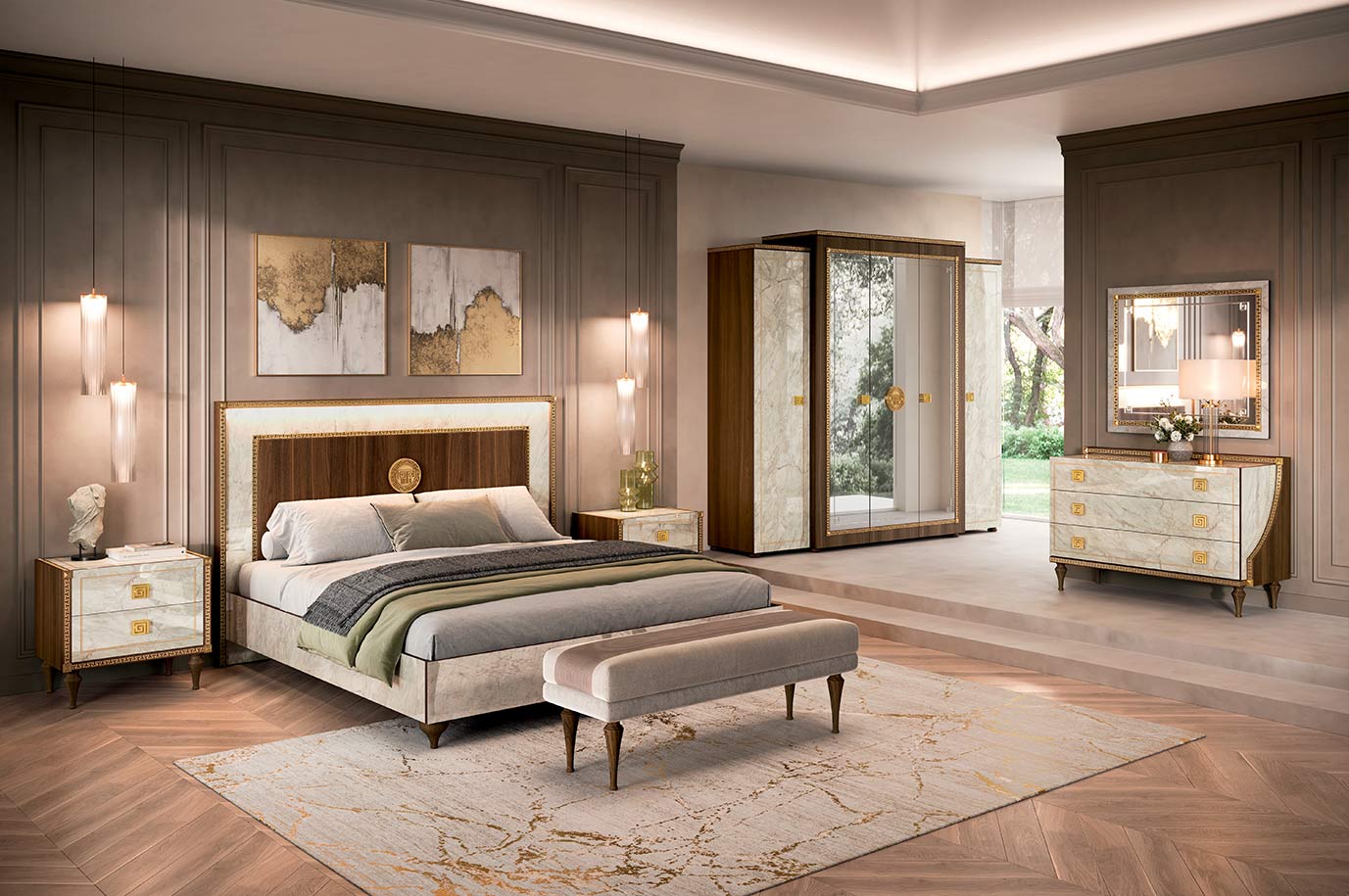
Camelgroup, another of Italy’s celebrated bedroom specialists, brings a more architectural sensibility to the headboard. Their designs — including the Alfieri collection — frequently incorporate integrated lighting: a soft LED strip recessed into the headboard frame that lends a hotel-like quality transforming the bedroom into a genuine retreat. Paired with floating bedside tables and a low-profile base, the effect is both dramatic and deeply liveable.
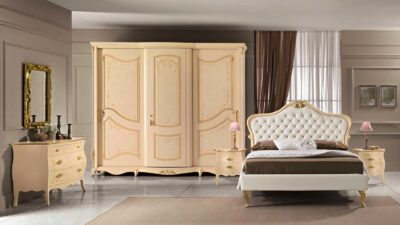
Verdi — a complete classic Italian bedroom by Camelgroup, where the bed, nightstands and dressing table share one decorative language.
The Verdi bedroom by Camelgroup shows a complete scheme working together: the tufted bed, matching nightstands and dressing table share a single decorative language.
Wardrobes as Works of Architecture
To the Italian eye, storage is never an afterthought. A wardrobe in an Italian bedroom is an architectural element in its own right — a piece that defines the geometry of the room as much as the bed itself. Fitted and freestanding wardrobes from Italian makers typically offer remarkable depth of customisation: mirrored or glass-fronted doors mirror the wider idea of using mirrors to bring light and structure to an Italian interior; internal LED illumination, velvet-lined drawers, and push-to-open mechanisms that eliminate the need for handles entirely.
Status Italia’s bedroom range demonstrates this approach with particular clarity. Their sliding-door wardrobe systems can be configured to span an entire wall, creating a seamless plane of high-gloss lacquer or wood-effect finish that reads more like a feature wall than a storage solution. Internally, each unit is as refined as its exterior — pull-out shoe racks, tie rails, and deep hanging sections meaning the wardrobe works as hard as it looks.
At Mondital, we stock a carefully chosen selection from Adora Interiors, Camelgroup, and Status Italia, all available to view at our London showroom.
A note from our showroom team: the wardrobe is the most underestimated decision in a bedroom scheme. Seeing the door mechanism, the internal configuration, and the finish quality in person changes the decision entirely.
Layering Texture and Tone
Even a finely made Italian bed frame needs the right context to work. Texture layering is the technique that separates a truly composed Italian bedroom from one that is merely well-furnished. Begin with the bed itself — an upholstered headboard in a tactile fabric — and build outwards.
A bedside table in a contrasting material introduces variety without discord: marble top against a lacquered base, or a smoked-glass surface on a solid oak frame. Soft furnishings deserve the same level of thought. Linen or cotton-sateen bedding in a tone that draws from the room’s palette, a textured throw at the foot of the bed, and a rug that grounds the composition — ideally in a low pile that does not compete with the furniture’s detailing.
Lighting is transformative. Integrated headboard lighting aside, consider bedside pendants hung from the ceiling rather than table lamps — they free up surface space and create a cleaner, more intentional silhouette. A dimmable overhead fitting, ideally recessed, completes the picture: a room that shifts effortlessly from bright and functional in the morning to warm and enveloping by evening.
Creating a true Italian bedroom sanctuary is less about individual purchases and more about a sustained commitment to quality and composition. Every element — from the sweep of a wardrobe door to the weight of a drawer — should feel considered. That attention to proportion and finish is a defining quality of many well-made Italian bedroom collections.
At Mondital, we help customers compare styles, materials, and proportions so the bedroom they create feels right both aesthetically and practically. Whether you are furnishing a principal bedroom from scratch or seeking a single centrepiece, the aim is always the same — to find pieces that make the room.
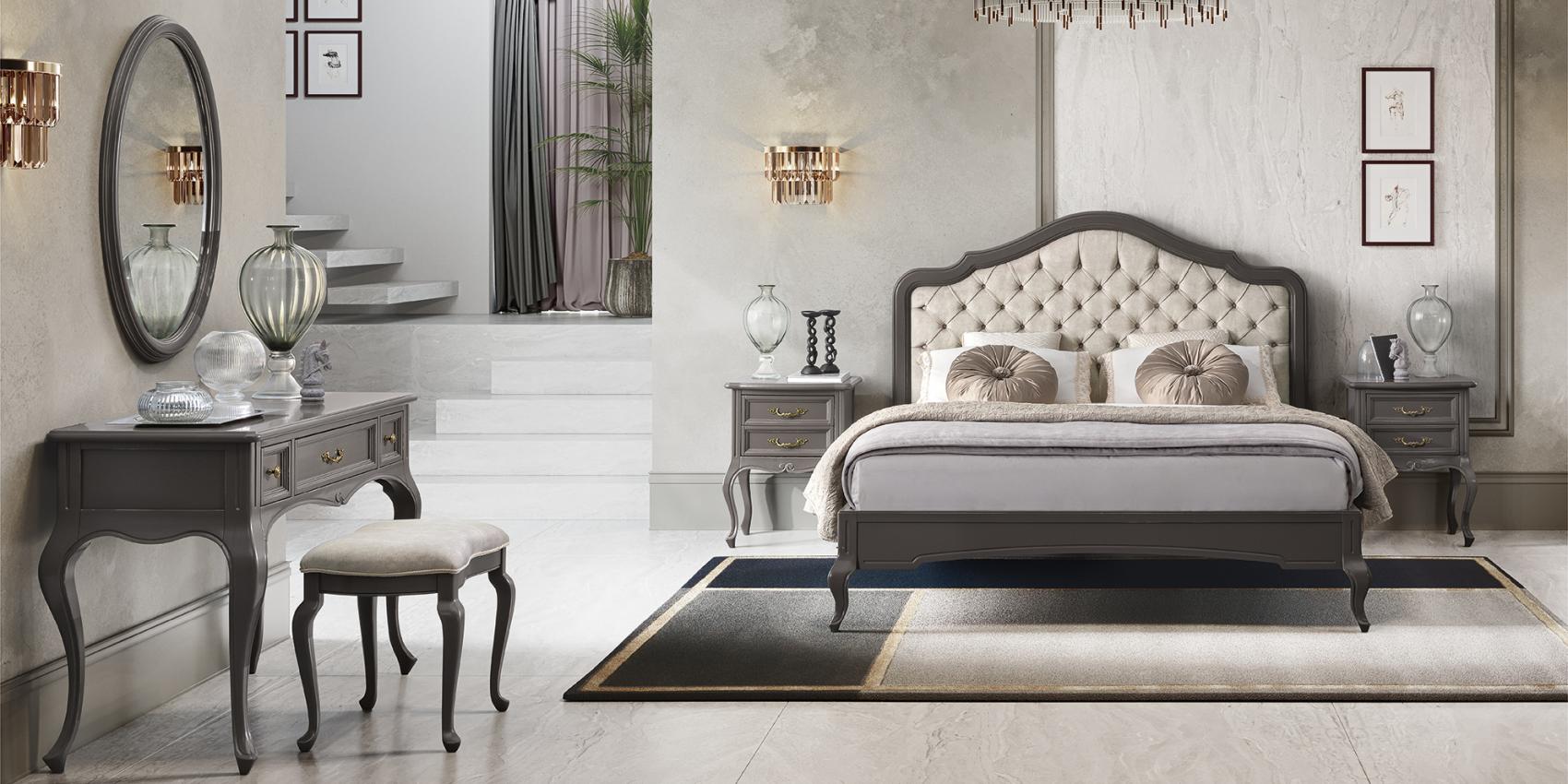
The Verdi bedroom by New Trend Concepts — a complete classic Italian bedroom suite where carved detail and warm tones create a coherent, calming scheme.
Frequently Asked Questions
How do I choose the right bed size for an Italian bedroom?
Start with the room dimensions and allow at least 60cm of clearance on each side of the bed for comfortable movement. A king-size bed works well in most principal bedrooms but the proportions of the headboard matter as much as the bed size itself — a taller, more substantial headboard can make even a standard double feel like a statement piece. The showroom team can advise on which proportions suit your specific room.
Is leather or fabric better for an Italian upholstered headboard?
Both work well in different contexts. Fabric — particularly velvet, bouclé, or linen blends — brings warmth and texture that suits both classic and contemporary Italian bedrooms. Leather is more practical for daily contact and develops a patina over time that adds character. The right choice depends on the atmosphere you want to create and how the room is used.
Is it worth visiting the showroom before ordering Italian bedroom furniture?
Very often, yes. The scale of a wardrobe, the depth of a headboard, and the quality of a finish are all significantly easier to judge in person than from photographs. For many customers, the showroom visit is where a shortlist becomes a confident final decision.
Can Mondital help me create a complete Italian bedroom scheme rather than just individual pieces?
Yes. We help customers build complete bedroom schemes — bed, wardrobes, bedside tables, dressing tables, and storage — from coordinated Italian collections so every piece shares the same design language and finish. If you have existing pieces you want to work around, bring photographs or dimensions to the showroom and the team can advise accordingly.
Mondital – Authorised Retailer of Over 20 Italian & Global Brands
Mondital is an authorised retailer of over 20 Italian and global furniture brands, each selected for their exceptional quality and outstanding value. Our team is here to help you choose the right pieces, whether you are gathering inspiration or ready to furnish your home.
Written by the Mondital editorial team, with insight from our London showroom specialists in Italian furniture, upholstery, and bespoke interior planning.
There is something unmistakably special about Italian dining room furniture — a harmony of craftsmanship, proportion, and material richness that transforms an everyday meal into an occasion. Whether you are furnishing a period townhouse in Kensington or a contemporary apartment in Shoreditch, choosing the right Italian dining room furniture is one of the most rewarding investments you can make for your home.
This guide covers everything that matters — the dining table, the chairs, the storage, and the lighting — so you can approach the decision with confidence and create a room that invites people to linger.
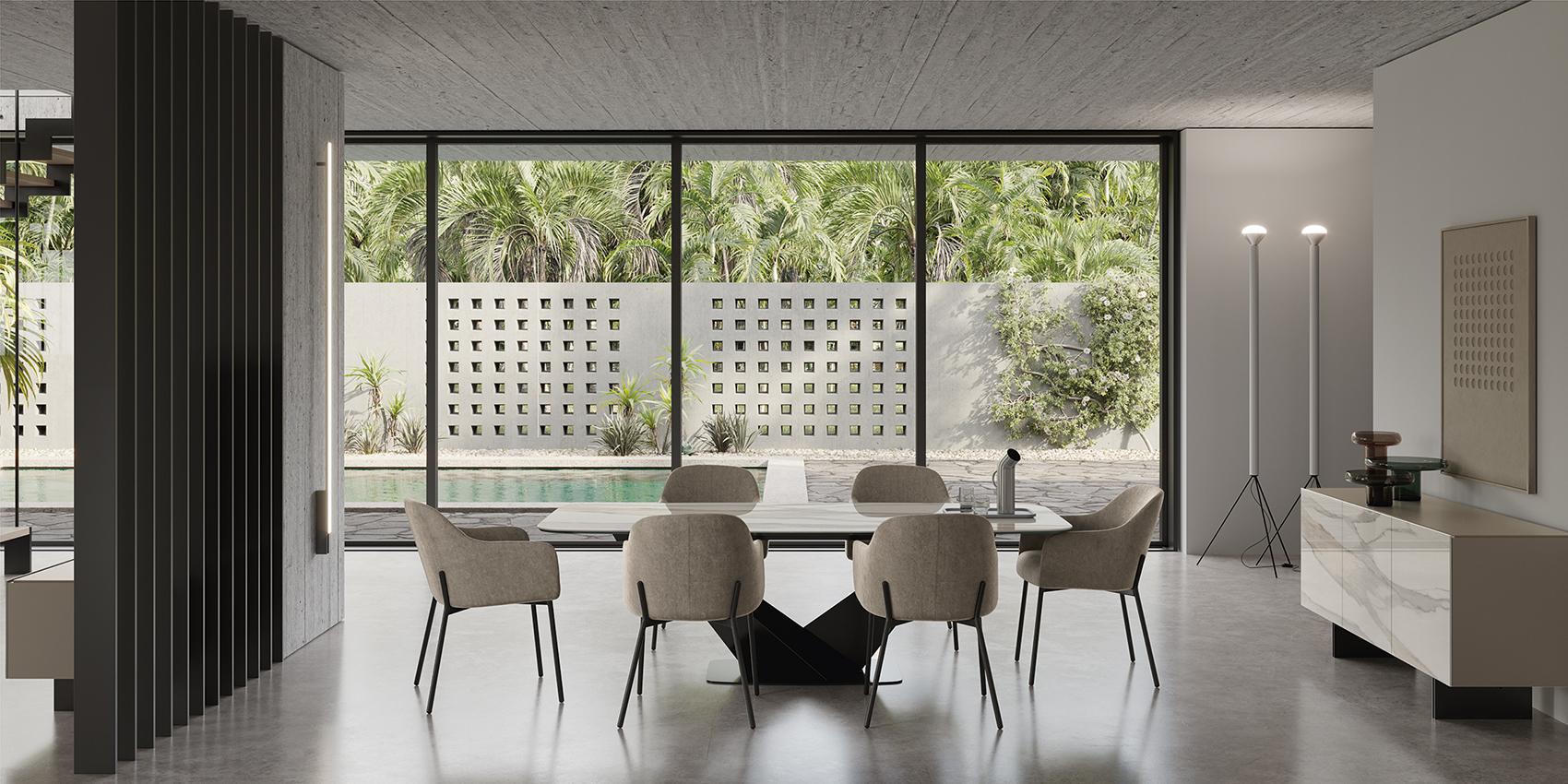
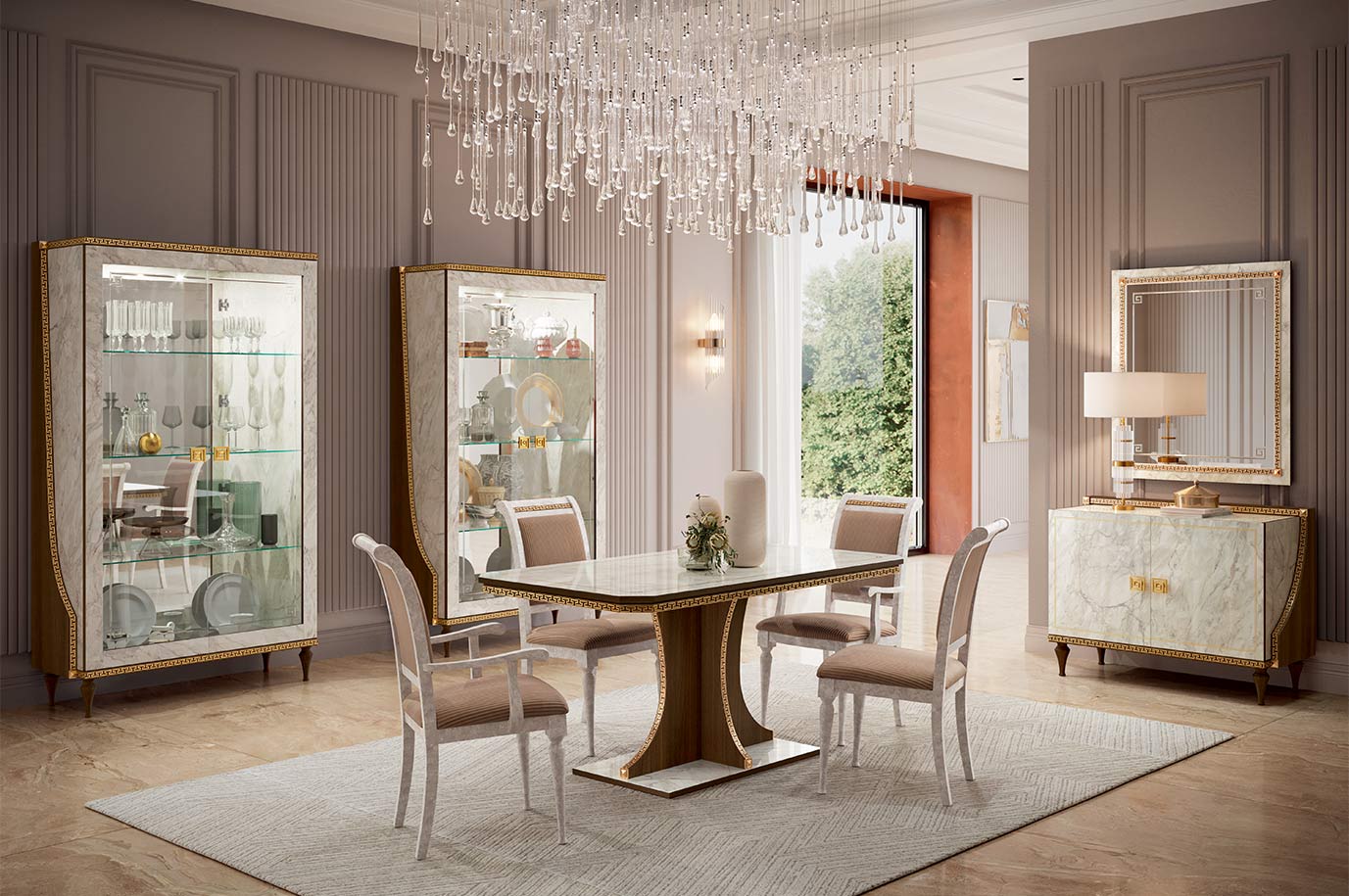
Zenith Day by Status Italia — a complete contemporary Italian dining room where a sculptural table base and Calacatta marble sideboard create a quietly dramatic room without competing for attention.
Choosing the Right Dining Table
The dining table is the centrepiece of the room — architecturally and socially. Before selecting a piece, consider the dimensions of your space and how many people you regularly seat. As a rule of thumb, allow at least 60cm of width per person and ensure a clearance of no less than 90cm around all sides of the table for comfortable movement.
Planning Your Dining Room
Allow at least 60cm of width per person and 90cm of clearance around the table for comfortable movement.
Decide how often you extend the table before choosing fixed versus extending.
Coordinate chairs, sideboard, and cabinet within one finish family so the room reads as a set.
Test chair comfort and table height in person — proportion is far easier to judge in the showroom.
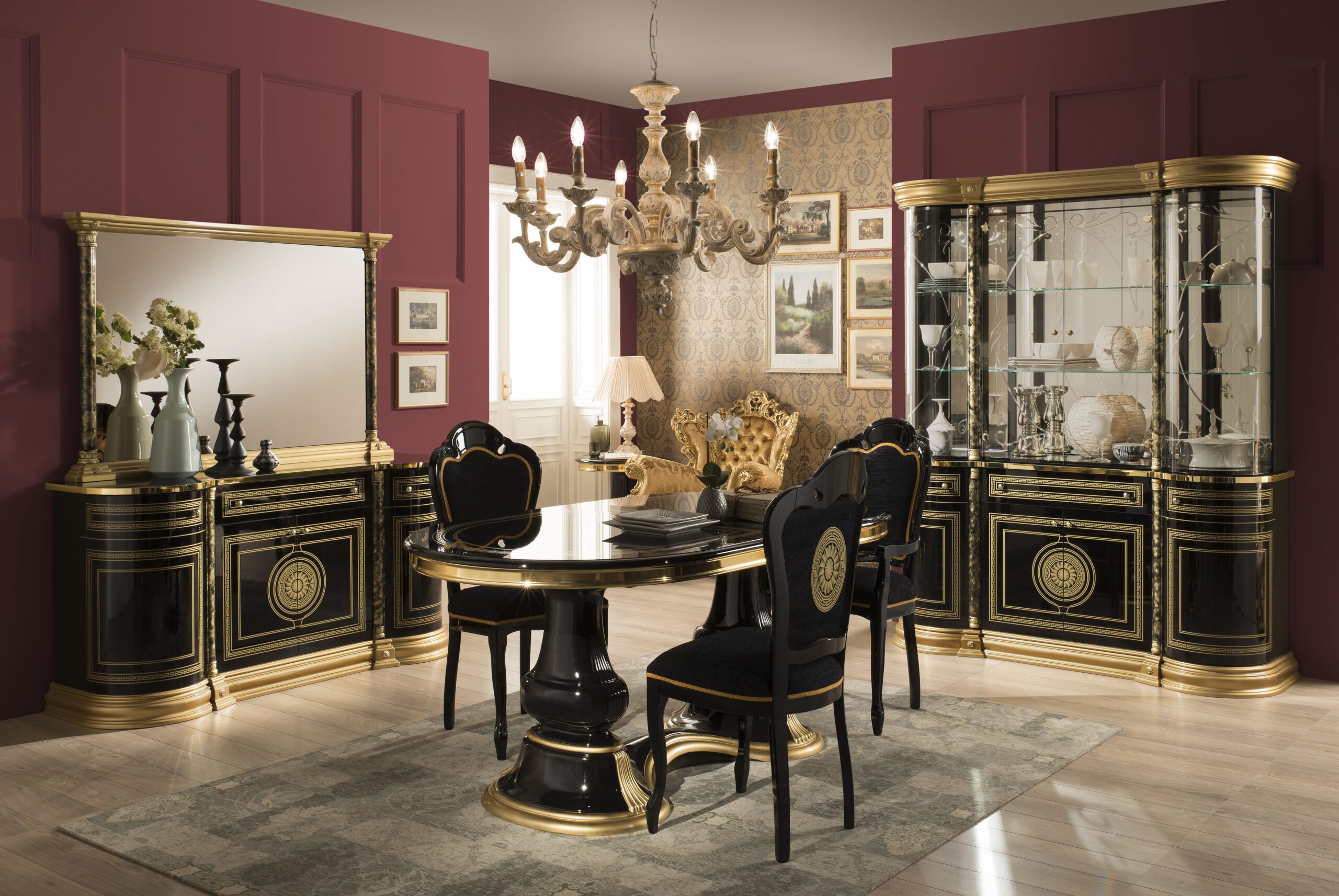
Italian A well-chosen dining table is about more than size: its proportions, surface finish, base design, and suitability for everyday use all matter. Depending on the collection, available finishes may include timber or timber veneer, lacquered surfaces, glass, and stone- or marble-effect tops. Confirm the material specification and care requirements for the exact table before ordering. Expect to find options in hand-polished solid wood, lacquered MDF with timber veneer, smoked or tempered glass, and statement stone tops in marble or travertine. Arredoclassic offer dining collections include models with carved bases and decorative veneer detailing, while Status Italia offers a more contemporary design language with sculptural bases and stone- or glass-effect surfaces. Available finishes and specifications vary by collection; many Arredoclassic designs feature sculptural bases and stone or glass surfaces.
A quick practical checklist: – Measure the room and mark the table footprint on the floor with tape before ordering – Allow at least 60cm width per person seated – Ensure at least 90cm clearance on all sides for comfortable movement – Check the table height works with your chosen chairs — standard dining height is 74 to 76cm – Consider whether an extending table would serve the room better than a fixed size
Extending tables are particularly sensible for London dining rooms where space is at a premium. Look for butterfly-leaf or draw-leaf mechanisms that integrate seamlessly into the table’s design. If flexibility is important, compare the extension mechanism as closely as the table finish. Many collections offer butterfly-leaf or draw-leaf systems designed to integrate neatly into the table; the mechanism, storage arrangement, and finish continuity vary by model.
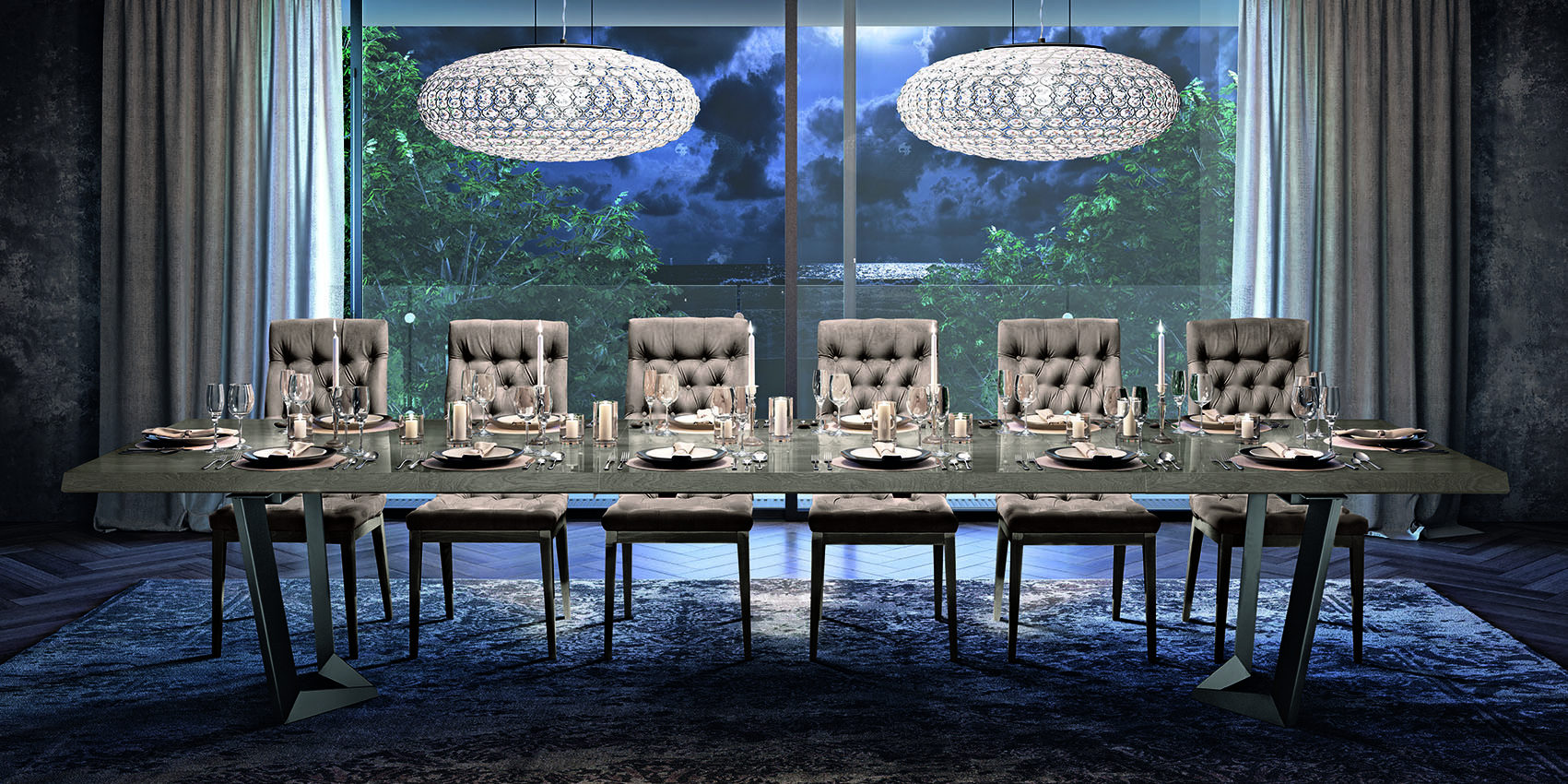
Modum Elite by Status Italia — a contemporary Italian extending dining table that integrates its leaf mechanism seamlessly, maintaining the integrity of the design whether seating four or eight.
Dining Tables at a Glance
Table Type
Best For
Effect in the Room
Extending walnut or lacquer table
Flexible entertaining and everyday use
Adapts from intimate to full-table without dominating
Fixed sculptural-base table
Design-led open-plan rooms
A quietly dramatic centrepiece with architectural presence
Marble or glass-topped table
Contemporary schemes
Light-reflecting surfaces that keep the room feeling open
Pairing Chairs for Comfort and Cohesion
Choosing dining chairs to complement your table is an exercise in both aesthetics and practicality. The seat height should sit comfortably beneath the table apron — typically between 43 and 48cm from floor to seat — while the chair back should provide genuine lumbar support, encouraging guests to linger over conversation rather than shift uncomfortably.
Status Italia’s Venus dining collection achieves a compelling balance between visual elegance and ergonomic comfort. Upholstered seats in premium fabrics or genuine leather add warmth and softness to a dining setting, while hand-carved frames or lacquered finishes echo the detailing of the accompanying table.
Do not feel obliged to match chairs identically to the table brand. A considered mix — for instance, an upholstered carver at each end with matched side chairs along the length — adds personality and depth. What matters is that the proportions are harmonious and the finishes relate to one another through colour, tone, or material.
A note from our showroom team: the chair decision is where most customers spend the least time and feel the most regret. Sit in every chair you are considering. Comfort at a dining table is the difference between guests who stay for hours and guests who leave after dessert.
Completing the Room: Sideboards, Display Cabinets, and Storage
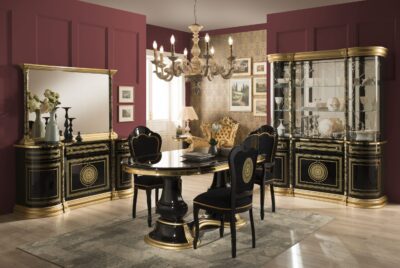
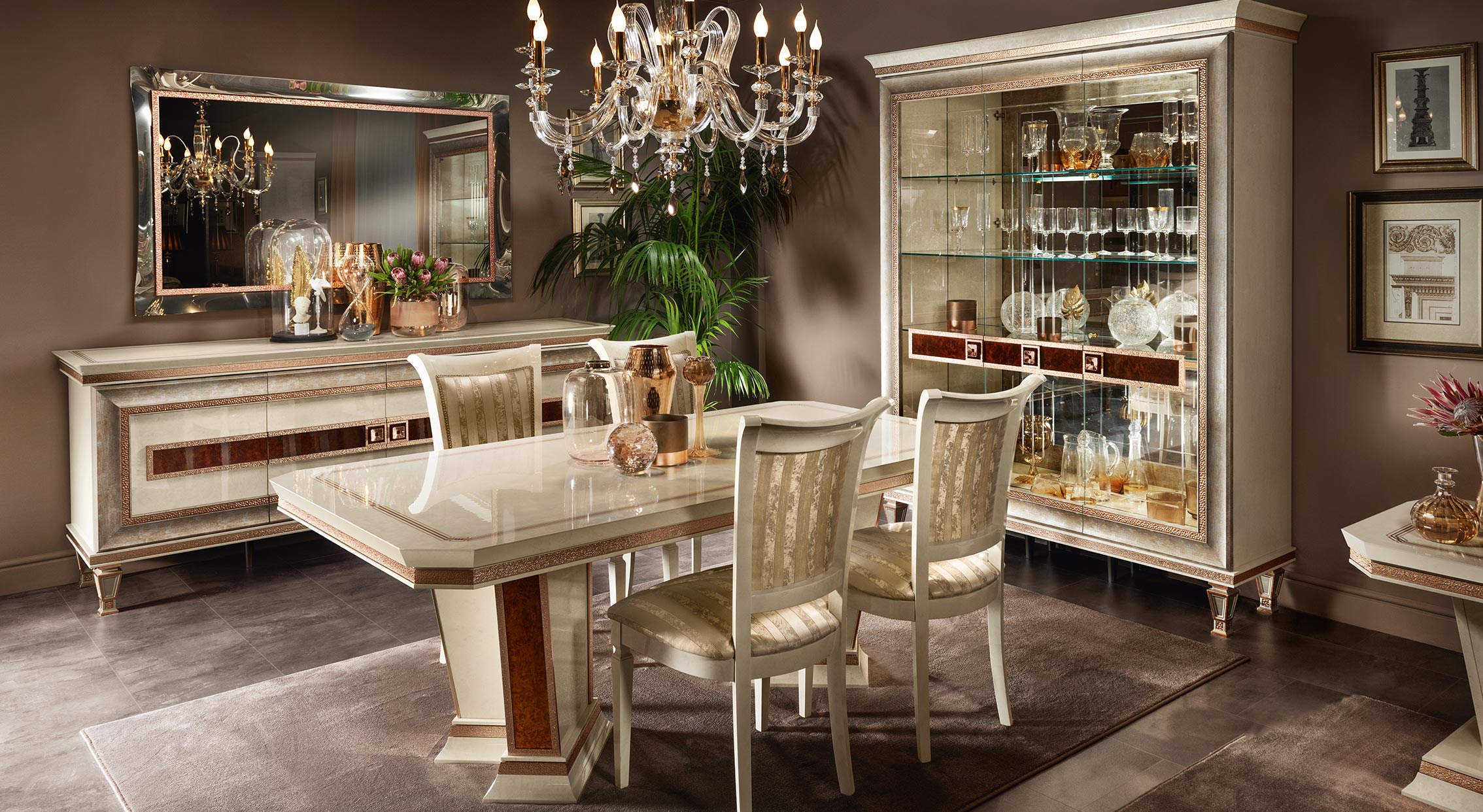
A coordinated dining setting: table, chairs and sideboard read as one scheme because they share a finish family.
The Linea dining room by Arredoclassic shows the principle in practice: table, chairs and sideboard share a finish family so the room reads as one composed scheme.
A dining room furnished only with a table and chairs feels incomplete. The sideboard is both functional and decorative — it houses serving ware, table linens, and glassware while providing a surface for a lamp, artwork, or a seasonal centrepiece. In an Italian dining setting, sideboards frequently echo the table’s finish — carved legs, antiqued brass hardware, or lacquered surfaces in ivory, graphite, or walnut tones.
Mobilsedia bring exceptional attention to storage furniture, offering display cabinets with leaded or clear-glass doors, thoughtfully lined interiors, and proportions that suit both classic and transitional dining rooms. A well-chosen display cabinet allows fine china and crystal to become part of the décor — on show without being precious.
For smaller dining rooms, consider a vitrine or china cabinet that combines open shelving with closed cupboards, maximising flexibility without overwhelming the space. Browse our full dining room furniture collection to explore the breadth of Italian pieces available.
Lighting is perhaps the single most transformative element in a dining room, and it deserves as much consideration as the furniture itself. A pendant or chandelier positioned directly above the dining table anchors the space and creates an intimate atmosphere for evening dining. As a general guide, hang the fitting so its base sits between 75 and 85cm above the table surface.
Layer your lighting rather than relying on a single source. Wall sconces or picture lights draw attention to artwork and architectural details, while dimmable downlights allow the mood to shift between a bright Sunday lunch and a candlelit dinner party. If your dining room adjoins a kitchen or living space, use lighting zones to define the dining area as its own distinct environment.
Italian furniture collections are often designed with specific lighting aesthetics in mind. The warm glow of a polished brass chandelier will flatter the gilded accents of a classical Arredoclassic dining set, while a sculptural matte-black pendant sits beautifully above a contemporary lacquered table. Let the furniture lead the lighting choice, not the reverse.
Bringing It All Together
Designing a luxury Italian dining room is ultimately about creating a space that invites people to gather, eat well, and stay a little longer than they planned. Start with the table — the piece around which everything else is orientated — and work outwards: chairs that welcome, storage that serves, and lighting that flatters.
Quality Italian furniture is an investment that rewards patience. Take the time to consider how each piece will live in your home over the years ahead, and resist the temptation to furnish everything at once if it means compromising on quality.
How much space do I need for an Italian dining table and chairs?
Allow at least 60cm of width per person seated and a minimum of 90cm clearance around all sides of the table for comfortable movement. For a six-seat table, a room around 3.5 by 3.5 metres can often work comfortably, depending on the table shape, chair depth, door positions, and whether additional storage is required. An extending table is worth considering for smaller rooms — Italian manufacturers produce extending mechanisms that integrate completely into the table design when not in use.
Is it better to match dining chairs to the table brand or mix them?
Matching chairs to the table brand ensures the design language is consistent, but a considered mix can add personality and depth. Upholstered carvers at each end with matched side chairs along the length is a classic and effective combination. What matters most is that the proportions are harmonious and the finishes relate through colour, tone, or material. The showroom team can advise on combinations that work well together.
Is it worth visiting the showroom before ordering Italian dining furniture?
Yes — particularly for the table and chairs, where scale and comfort are genuinely difficult to judge from photographs. Sitting in a dining chair for a few minutes tells you more than any specification sheet, and seeing the table in a room context gives a much clearer sense of proportion. For most customers, the showroom visit is where the decision becomes clear.
Can Mondital help me design a complete Italian dining room rather than just individual pieces?
Yes. We help customers build complete dining room schemes — table, chairs, sideboard, display cabinet, and lighting considerations — from coordinated Italian collections. Whether you are starting from scratch or adding to an existing room, the team can advise on which pieces work together and how they will sit in your specific space.
Mondital – Authorised Retailer of Over 20 Italian & Global Brands
Mondital is an authorised retailer of over 20 Italian and global furniture brands, each selected for their exceptional quality and outstanding value. Our team is here to help you choose the right pieces, whether you are gathering inspiration or ready to furnish your home.
Written by the Mondital editorial team, with insight from our London showroom specialists in Italian furniture, upholstery, and bespoke interior planning.
Classic Italian interior design has endured because it is admired for its emphasis on craftsmanship, proportion, and decorative richness. If you have been drawn to the grandeur of hand-carved wood, the warmth of gold leaf detailing, and the opulence of rich silk and velvet fabrics, then classic Italian furniture in London homes is very much within reach — and more liveable than you might imagine.
This guide covers what defines the classic Italian aesthetic, how to incorporate it room by room, and how to make it work in a contemporary home without losing any of its inherent character.
Classic Italian design traces its roots to the Renaissance and Baroque periods, when Italian artisans elevated furniture-making to a fine art. The style is characterised by a sense of architectural formality — pieces that feel monumental yet graceful, with every curve and carving considered as carefully as a brushstroke on canvas.
At its heart, classic Italian style rests on three pillars: exceptional materials, meticulous craftsmanship, and harmonious proportion. Many classic Italian collections combine timber or timber-veneered structures with decorative carving, veneer work, gilded detailing, and rich upholstery. Materials and construction methods vary by collection, so it is worth confirming the specification of individual pieces. Gilded detailing can range from gold-leaf work to gold-toned decorative finishes and brass hardware, depending on the collection. Used selectively, these details can add warmth and formality without making the room feel heavy.
Upholstery plays an equally important role. Damask, brocade, velvet, and silk in deep jewel tones — sapphire blue, burgundy, forest green, ivory — lend warmth and texture, grounding the opulence of carved frames in something tactile and inviting.
Materials at a Glance
Material
Best For
Effect in the Room
Carved walnut or cherry
Statement case pieces and bedsteads
Warmth, weight, and a sense of permanence
Gold leaf and gilded detail
Accent framing and decorative highlights
Luminosity and formality without heaviness
Damask, velvet, and silk upholstery
Sofas, headboards, and dining chairs
Tactile richness that grounds ornate frames
Key Elements to Incorporate Room by Room
The beauty of classic Italian interior design is that it need not be all-or-nothing. Even a single statement piece — a carved console table in the hallway, a gilded mirror above a fireplace — an idea explored further in using mirrors to bring light and structure to an Italian interior — an idea explored further in — can elevate an entire room. Begin with the spaces you use most and build outward.
Where to Begin
Start with the room you use most, and let a single statement piece set the tone before you build outward.
Match the decorative language across pieces — carving style, finish, and upholstery family — so the room feels resolved rather than assembled.
Balance ornate frames with restrained walls and flooring, letting the furniture be the focal point.
See finishes and fabrics in person where you can — gold leaf, walnut grain, and silk read very differently in the room than on screen.
The Sitting Room
An art-deco living room showing classic Italian style expressed through a sofa and display cabinet.
The Dolce Vita living room by Arredoclassic shows the style expressed through a sofa and display cabinet with art-deco symmetry.
The sofa and armchairs form the centrepiece. Look for frames with cabriole legs and scroll arms, upholstered in a rich fabric that complements your existing colour palette — the Athena Gold and Cleopatra collections are strong starting points. A matching coffee table with a marble or inlaid wood top anchors the seating arrangement. Layering in table lamps with ceramic or gilded bases, and adding decorative cushions in complementary textures, helps the room feel curated rather than staged.
The Dining Room
An extending table in solid walnut or mahogany, surrounded by high-backed upholstered chairs, creates an atmosphere of formal elegance — ideal for entertaining. A matching credenza or display cabinet allows you to showcase fine china or crystal while keeping the room feeling composed rather than crowded.
The Bedroom
For the finished result, see The Art of the Italian Bedroom — a guide to building a bedroom that feels composed rather than crowded.
For the finished result, see — a guide to building a bedroom that feels composed rather than crowded.
A carved bedstead with a generous upholstered headboard, partnered with matching bedside tables and a wardrobe featuring inlaid panels or bevelled mirrors, transforms the room into a private sanctuary. The Romantica collection from Arredoclassic demonstrates how a complete classic bedroom scheme — where every piece shares the same decorative language — creates a room that feels entirely resolved.
Romantica by Arredoclassic — a complete classic Italian living room where coordinated upholstered seating, carved frames, and a wall unit share the same decorative language, creating a room that feels entirely considered.
Arredoclassic and Adora Interiors
When sourcing classic Italian furniture in London, two names stand apart for their commitment to quality: Arredoclassic and Adora Interiors. Both draw on long traditions of Italian furniture-making. Where production takes place, it is within established Italian workshops; specific manufacturing locations vary by collection, so confirm provenance for the piece you are considering.
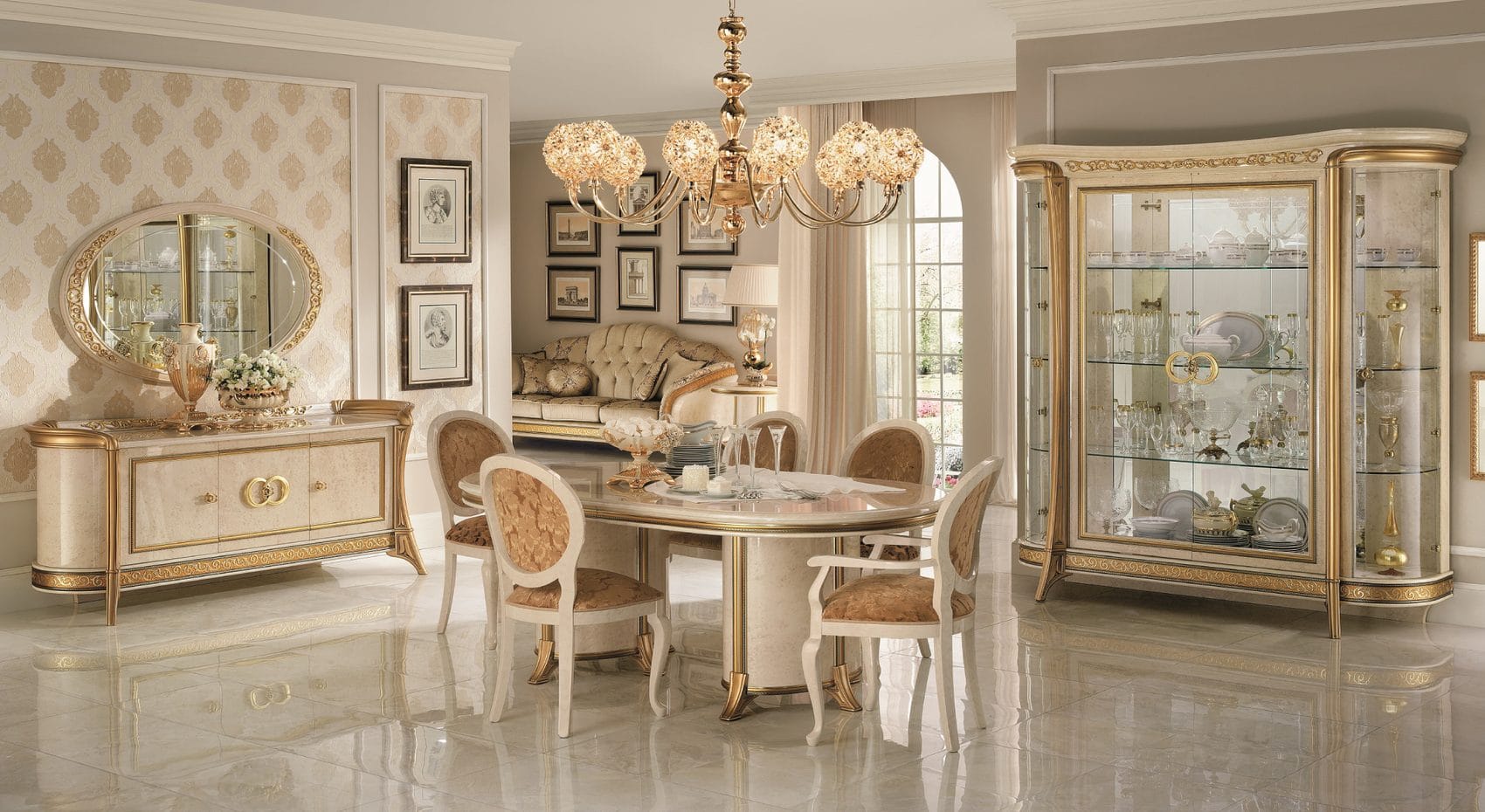
Arredoclassic produces complete room collections designed with extraordinary coherence. Their finishes range from antique white with gold leaf to rich dark walnut, ensuring there is a collection to suit a variety of interior schemes — from the formal grandeur of Melodia and Leonardo to the softer, more decorative character of Romantica and Dolce Vita.
Adora Interiors brings a similarly rigorous approach, with collections that balance classic ornament with contemporary living needs, making them particularly well-suited to London townhouses and period apartments where a fully formal scheme might feel impractical.
You can explore both brands in full on their dedicated Mondital pages — Arredoclassic and Adora — where each range is presented room by room and finish by finish.
Mixing Classic Italian Pieces With a Contemporary Setting
One of the most common questions we hear from London customers is whether classic Italian furniture can work in a modern home. The answer is an emphatic yes. Some of the most striking interiors we have seen place a single beautifully carved sideboard or a pair of classic upholstered armchairs against clean white walls and polished concrete floors. The contrast between the ornate and the minimal creates a tension that feels entirely current.
The key is to let the classic piece be the star. Keep surrounding furniture simple and architectural, allow the floor space around it to breathe, and echo one element from the classic piece — perhaps its finish, a gilded detail, or a fabric tone — elsewhere in the room in a more restrained way. A cushion that picks up the gold of a carved frame, or a pendant light with a warm brass finish, is enough to create harmony without tipping into pastiche.
The Prestige and Athena Gold collections work particularly well in this way — their proportions and finishes are refined enough to sit comfortably in contemporary settings without losing any of their inherent grandeur. This approach is ideal for modern London apartments where a fully period-style room is impractical, and it allows you to build your collection gradually, adding pieces over time.
Practical Advice for London Homes
Well-made classic furniture can remain in use for many years when chosen and cared for well, which makes the investment genuinely worthwhile — but there are a few considerations worth keeping in mind. Proportion matters above everything else. These pieces are designed for rooms with generous ceiling heights and adequate floor space. Always measure carefully and consider scale before committing to a collection.
Lighting is your greatest ally in a classic Italian interior. Wall sconces, chandelier-style pendants, and table lamps with warm-toned bulbs will bring out the depth of carved wood and the gleam of gilded details in a way that cold or overhead lighting cannot. Natural light, reflected by strategically placed mirrors, further enhances the sense of warmth and grandeur.
Do not overlook the supporting cast of accessories. Ornate picture frames, decorative mirrors, and sumptuous window treatments in lined silk or velvet complete the effect. The aim is layered richness, not clutter — every object should earn its place and contribute to the overall composition.
Whether you are furnishing a period property or bringing timeless elegance to a contemporary flat, classic Italian furniture offers one of the clearest paths to a space that feels both luxurious and deeply personal.
At Mondital, we help customers compare styles, finishes, and proportions so the pieces they choose feel entirely right — aesthetically, practically, and over the long term. Visit us in the showroom, explore our classic Italian furniture collections, or speak to the team for tailored advice on which collections suit your home.
A classic Italian living room with carved detail and a gold frieze — the finish language a whole home can share.
Frequently Asked Questions
How do I know if classic Italian furniture will suit my home?
Classic Italian furniture works in a wider range of homes than most people assume. Period properties with high ceilings and generous rooms are the natural setting, but a single well-chosen classic piece can work beautifully in a contemporary flat — particularly when placed against simple, architectural surroundings that let the craftsmanship speak for itself. The showroom team can advise on which collections suit specific room types and ceiling heights.
Is classic Italian furniture practical for everyday use?
Yes, when the quality is appropriate. Well-made classic Italian furniture — with solid hardwood frames, quality upholstery, and properly finished surfaces — can remain in use for many years when chosen and cared for well. The investment can be significant, but a well-chosen piece that is cared for appropriately can remain part of a home for many years. Compare the specification, finish, upholstery, and care guidance for the exact piece rather than relying on general assumptions about a style or brand.
Is it worth visiting the showroom before ordering classic Italian furniture?
Yes — more so than almost any other category. The scale of a carved dining table, the depth of an upholstered sofa frame, and the quality of a gold leaf finish are all significantly harder to judge from photographs than from the piece itself. For most customers, the showroom visit is where the decision moves from consideration to confidence.
Can Mondital help me mix classic Italian pieces with my existing contemporary furniture?
Yes. This is one of the most common briefs we work with and one of the most rewarding outcomes. The key is choosing the right piece to lead the room — typically a sofa, dining table, or wardrobe — and letting everything else support it. The team can advise on which collections have the proportions and finishes to sit well alongside contemporary furniture without either dominating or being overwhelmed by it.
Mondital – Authorised Retailer of Over 20 Italian & Global Brands
Mondital is an authorised retailer of over 20 Italian and global furniture brands, each selected for their exceptional quality and outstanding value. Our team is here to help you choose the right pieces, whether you are gathering inspiration or ready to furnish your home.