

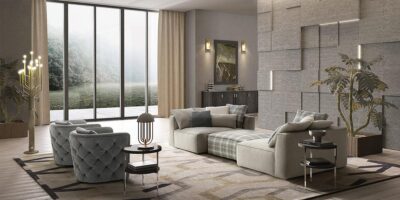
An Italian sofa often becomes the point from which a living room takes its character. It shapes how the room is used in the evening, where conversations gather, how light moves across the space and whether the interior feels composed or unsettled. The right choice does not announce itself through scale alone. It feels proportionate to the architecture, comfortable in daily life and convincing from every angle.
Choosing an Italian sofa is therefore not simply a question of selecting a silhouette or colour. The decision involves room dimensions, circulation, seat depth, upholstery, family routines and the visual relationship between the sofa and everything around it. A generous corner composition may suit an open-plan room, while a more tailored two or three-seater can preserve the rhythm of a London sitting room with period details.
At Mondital, we encourage customers to consider a sofa as part of a wider interior rather than an isolated purchase. Our range brings together classic and contemporary Italian furniture from carefully selected manufacturers, helping customers compare proportions, finishes and configurations in a considered way.
This guide explains how to choose an Italian sofa that suits your room, your routine and the atmosphere you want to create.
Visit our Italian furniture showroom in London to compare styles and comfort in person, or explore our Italian sofa collections online.
Explore Italian Sofas
Visit Our London Showroom
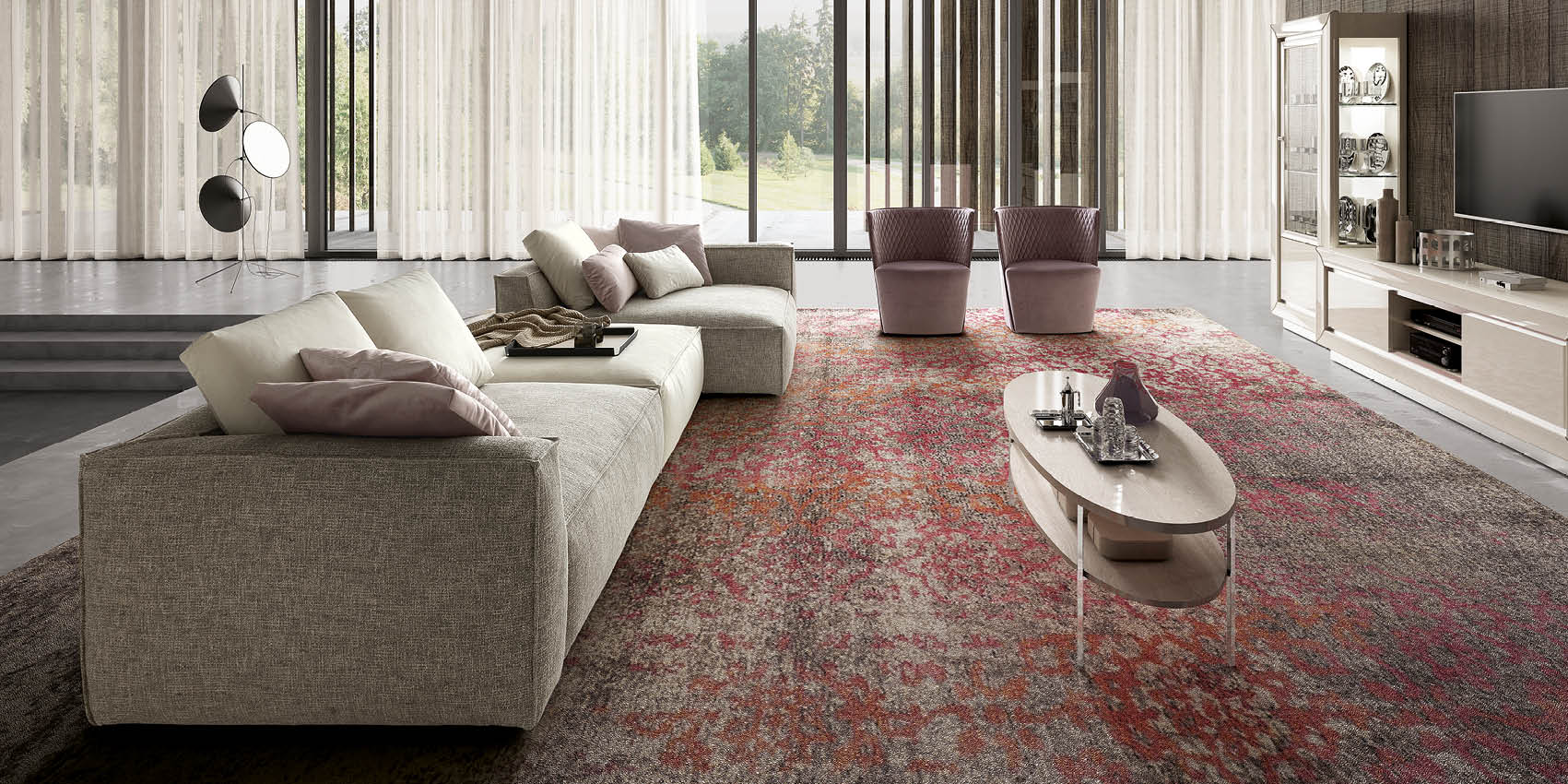
The Piuma modular sofa by Camelgroup shows how a fabric sectional can define a relaxed, layered living space.
Begin With the Room, Not the Sofa
Before looking at upholstery samples or deciding between classic and contemporary forms, understand the room the sofa must serve. Measure the length and width of the usable seating area, then note doors, radiators, windows, fireplaces, alcoves and routes through the room. The available floor area is important, but so is the space needed to move comfortably around the furniture.
A sofa that looks restrained in a large showroom can feel dominant in a narrow Victorian reception room. Equally, a small sofa placed in a wide open-plan living space can make the room feel under-furnished and disconnected. Start by identifying the role the sofa needs to play: everyday family seating, a formal drawing-room focal point, relaxed television viewing, entertaining, or a combination of these.
A practical sofa-planning checklist
- Measure the room, doorways, staircases and lift access before narrowing the choice.
- Mark the proposed sofa footprint on the floor with masking tape or newspaper.
- Leave enough clear space for doors, walkways and occasional tables.
- Consider where lamps, side tables, storage and rugs will sit before choosing the final configuration.
A useful question is not simply, “Will it fit?” but, “Will the room still work once it is here?” The answer should account for both physical access and the ease of everyday living.
Choose the Right Configuration for the Way You Live
The most suitable configuration depends on how many people use the room, where they naturally sit, and whether the sofa must define a zone within a larger plan. A two or three-seater offers flexibility and can work well with armchairs or a chaise longue. It is often a strong choice for rooms where windows, fireplaces or architectural features already create a clear focal point.
Corner sofas can provide generous seating while establishing a natural boundary in an open-plan layout. The [Piuma Italian corner sofa](https://mondital.com/collections/piuma-italian-corner-sofa/) is one example of a contemporary sectional format available through Mondital. A corner arrangement can be especially effective when the living area needs to feel distinct from a dining or kitchen space, provided it does not interrupt the main route through the room.
A chaise-end sofa offers another way to create a more relaxed seating position without committing to a full corner layout. It can suit customers who want room to stretch out while retaining a more open visual line on one side of the composition. The best option is the one that supports your daily habits rather than simply filling the largest possible area.
| Configuration | Best for | Effect in the room |
|---|---|---|
| Two or three-seater sofa | Defined rooms and flexible furniture layouts | Leaves space for chairs, tables and circulation |
| Chaise-end sofa | Relaxed seating with a lighter footprint than a corner sofa | Creates an informal place to recline while keeping one side visually open |
| Corner sofa | Larger households or open-plan living areas | Provides generous seating and can help define a living zone |
Let the Architecture Guide the Style
A sofa should relate to the room’s architecture without becoming overly literal. In a period home, a contemporary Italian sofa can bring useful clarity to decorative cornicing, panelled walls or original fireplaces. The contrast works best when the proportions are carefully judged: a refined contemporary silhouette can sit comfortably alongside older details when its scale is calm and its upholstery has depth.
In a newer apartment or open-plan home, classic detailing can bring warmth and structure where the architecture is deliberately minimal. A more decorative profile, a shaped arm or a considered wood detail may give the room a stronger sense of personality. The aim is not to make every element match. It is to create a relationship between forms that feels intentional.
The [Ambra Italian corner sofa](https://mondital.com/collections/ambra-italian-corner-sofa/) by Adora illustrates a more architectural corner-sofa approach within Mondital’s collection. When comparing options, look beyond the front elevation. Consider the side profile, back height, leg detail and how the sofa will read from adjacent rooms or a hallway.
Look Closely at Upholstery and Colour
Upholstery changes both the practical and visual character of a sofa. Leather can bring a clean, defined surface and may suit interiors where a more tailored finish is wanted. Fabric offers a wider range of texture, weave and tonal variation, allowing the sofa to feel softer or more layered within the room. Neither is automatically the better choice; the right material depends on the atmosphere you want and how the sofa will be used.
Think about natural light before settling on a colour. Pale fabrics can make a room feel open but may require more attention in a busy household. Deep tones can anchor a large room and create contrast against lighter walls. Mid-tones often offer versatility, especially where the sofa needs to work with changing cushions, rugs and artwork over time.
It is also worth considering the sofa as part of a wider material palette. Timber furniture, marble, metal, lacquered surfaces and curtain fabrics all influence how upholstery reads. A fabric sample that appears neutral on its own may look warmer, cooler or more textured once placed beside the finishes already present in your home.
*A note from our showroom team: upholstery should be viewed in natural and artificial light where possible, because colour, texture and sheen can change noticeably throughout the day.*
Comfort Should Be Felt, Not Assumed
Comfort is personal. One customer may prefer a deeper, more relaxed seat; another may want a more upright position that feels supportive during conversation or reading. Seat height, seat depth, back angle, arm height and cushion construction all contribute to how a sofa feels in use.
Photographs are useful for understanding form, but they cannot tell you how the seat responds, whether the back height feels right, or how easily you can rise from the sofa. This is why a showroom visit can be valuable before ordering, particularly where a sofa will be a major part of everyday family life.
When you visit, take time to sit rather than simply glance. Try the sofa in the way you use one at home. Sit upright, lean back, place your feet up if the design allows it, and compare several options. Consider whether different household members will be comfortable too.
Consider Construction and Finish With Care
The visible design of a sofa matters, but the details beneath the upholstery also deserve attention. Ask about the frame, suspension, cushion options, upholstery choices and finishing details available for the specific model you are considering. These details can affect the sofa’s feel, appearance and suitability for your home.
Tailoring is equally important. Seams, piping, buttoning, pleating and the way a fabric meets the arm or base all shape the final impression. A sofa should look composed not only when newly placed, but also as part of the room’s everyday visual order.
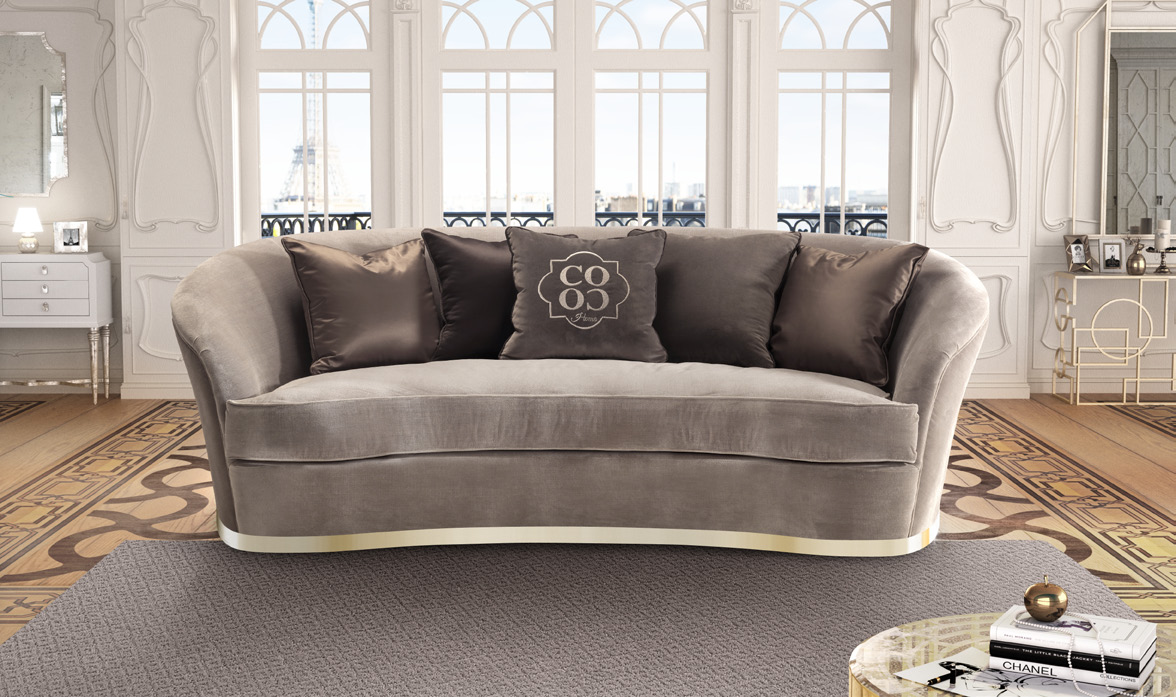
The [Piuma Italian sofa](https://mondital.com/collections/piuma-italian-corner-sofa/) by Camelgroup provides a more classic sofa reference within the Mondital range. Its visual language offers a useful contrast to a contemporary sectional: where a contemporary sofa may rely on a low line and broad planes, a classic form can introduce more decorative structure and a stronger sense of ceremony.
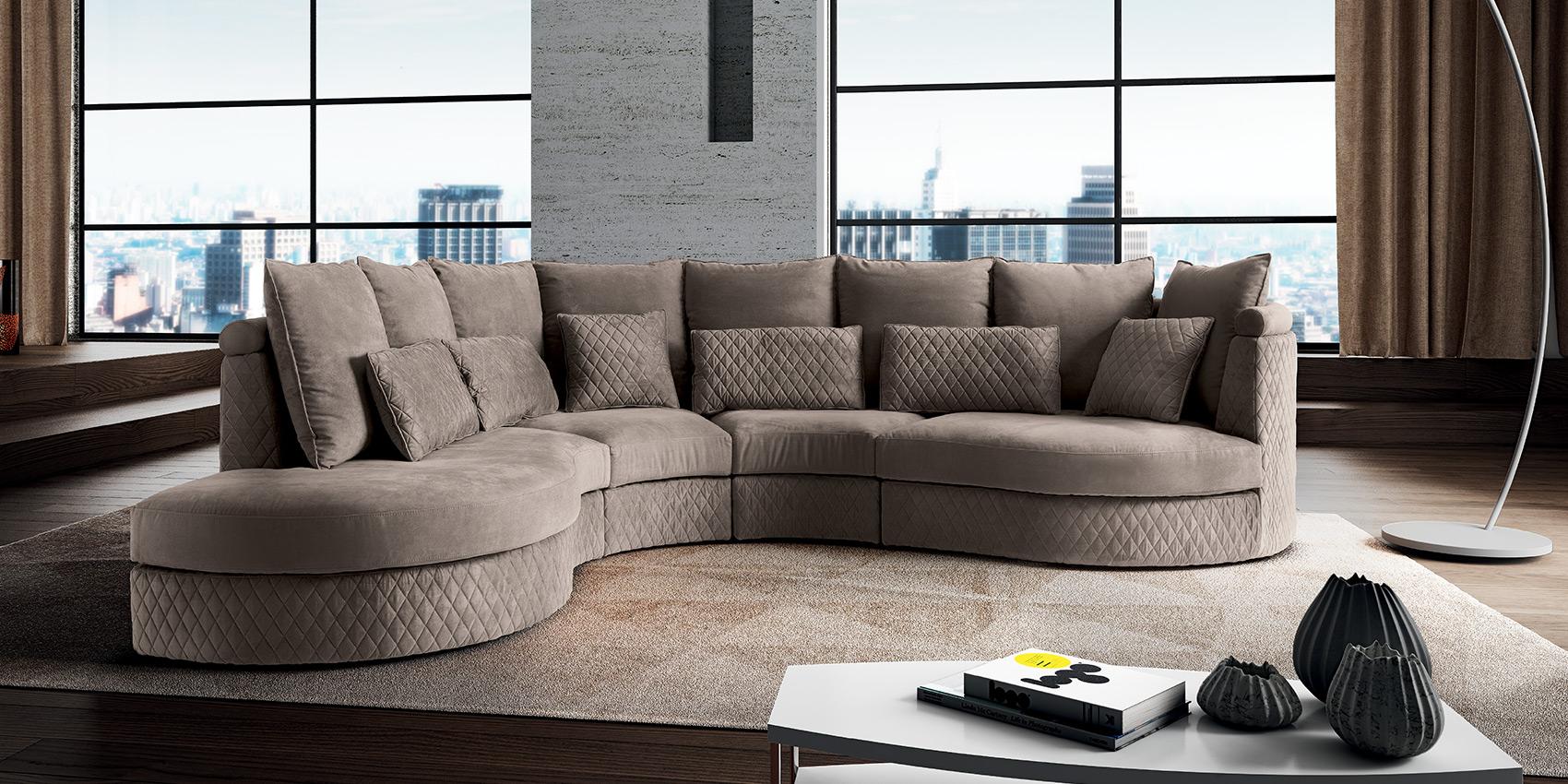
The New York sofa shows how a quilted fabric finish adds depth and softness that a plain surface cannot.
Think About the Whole Living Room
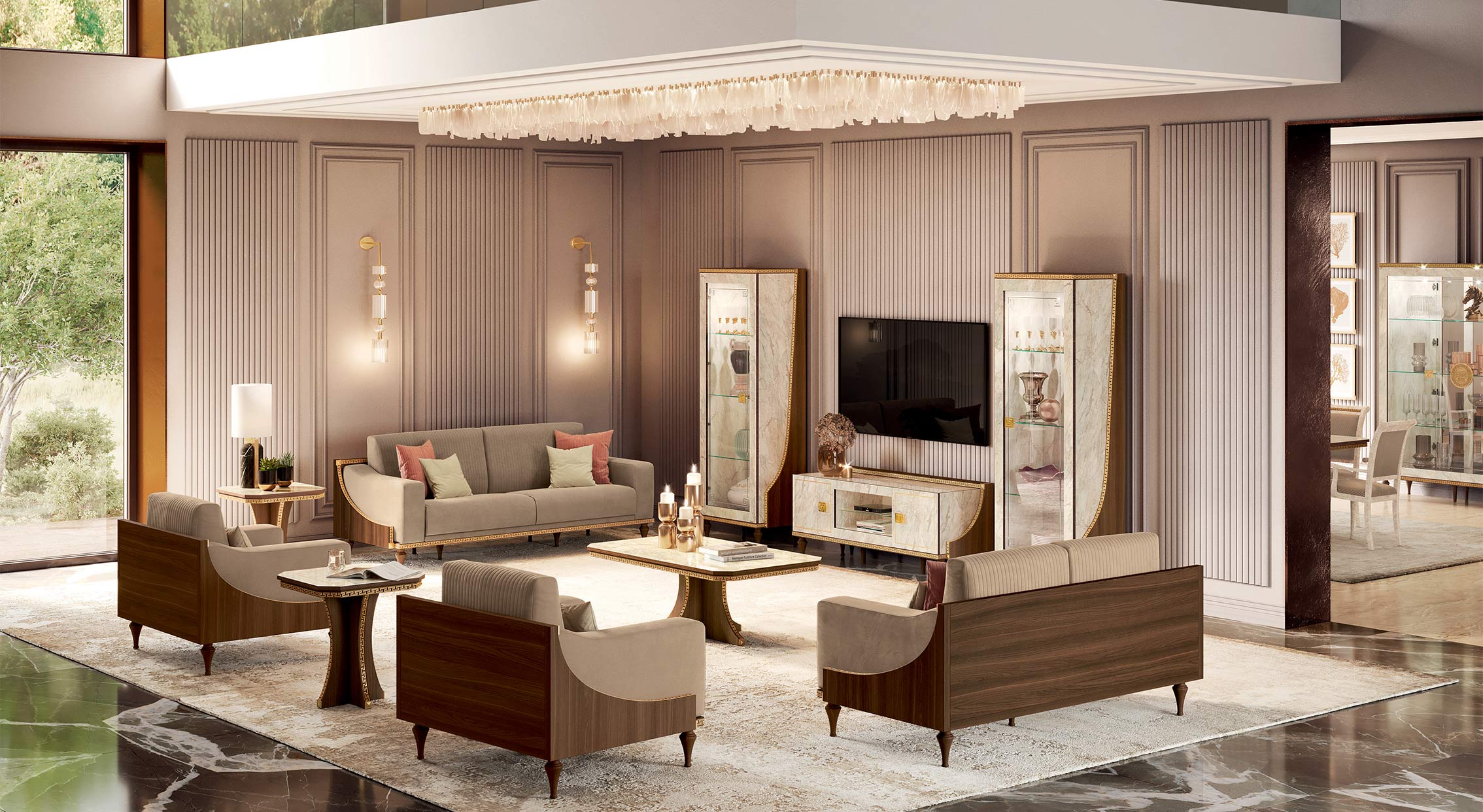
The Romantica living room by Arredoclassic shows this balance: a low TV wall unit keeps the wall calm while the sofa and seating hold the room together.
A sofa should not be chosen in isolation from the pieces that will surround it. Coffee tables, side tables, cabinets, lighting and rugs each affect the scale and mood of the final arrangement. A large sectional may need a generous coffee table and an appropriately sized rug to avoid appearing adrift. A smaller sofa may benefit from armchairs or occasional seating to create a fuller conversational setting.
Consider sightlines as well. In an open-plan space, the rear of the sofa may be as visible as the front. In a traditional room, the sofa may sit opposite a fireplace or beneath a window, making its height and silhouette especially important. The goal is not to make every item identical in style, but to establish a rhythm of related proportions, materials and tones.
For broader inspiration beyond sofas, browse Mondital’s [living room furniture collections](https://mondital.com/living-room-furniture/) and [full collection range](https://mondital.com/collections/). Seeing the sofa alongside complementary furniture can make decisions about scale and finish far easier.
Visit Mondital to Compare Italian Sofas in Person
A sofa is one of the most substantial decisions in a living room, and it benefits from time. At Mondital’s Italian furniture showroom in London, customers can compare classic and contemporary Italian sofas, consider proportions in person and discuss how a particular configuration may suit their home.
Bring room measurements, photographs, a simple floor plan and any samples you are already working with. These details make a more useful conversation possible and help ensure that the sofa you choose works with the room as it is, not only as it first appears in an image.
Mondital offers free white-glove delivery across London and the Home Counties, with delivery to the rest of the UK and internationally arranged for a charge or through a trusted shipping partner.
Visit the Italian Furniture Showroom
Browse Italian Sofas
Frequently Asked Questions
How do I know what size Italian sofa will suit my room?
Measure the usable seating area, access routes and the clear space needed for doors and walkways before choosing a sofa. Marking the proposed footprint on the floor can help you judge the scale in context. A showroom discussion with room measurements and photographs can also help you compare suitable proportions.
Should I choose leather or fabric for an Italian sofa?
Leather and fabric create different visual and practical effects, so the best choice depends on your room and how the sofa will be used. Leather can feel more tailored and defined, while fabric offers a wider range of textures and tones. View samples in the light conditions of your home before making a final decision.
Is it worth visiting the showroom before ordering?
Yes. Visiting the showroom allows you to assess seat depth, back height, upholstery texture, colour and proportion in person. It also gives you the opportunity to compare configurations and discuss your room dimensions with the Mondital team.
Can Mondital help me choose a sofa for an open-plan living space?
Yes. Bring room measurements, photographs and a simple floor plan to the showroom, and the Mondital team can help you consider suitable configurations, proportions and complementary furniture. A corner or chaise-end sofa may help define the living area while keeping circulation practical.
Mondital – Authorised Retailer of Over 20 Italian & Global Brands
Mondital is an authorised retailer of over 20 Italian and global furniture brands, each selected for their exceptional quality and outstanding value. Our team is here to help you choose the right pieces, whether you are gathering inspiration or ready to furnish your home.
Call Us: 020 8556 1221 | WhatsApp: Chat with us | Get in Touch | Get Directions
